Showing posts with label fiction. Show all posts

This Week in Reading: Week 1

I challenged myself to read 100 books in 2017. Last year when I challenged myself to read 52, I didn’t think that I would actually read that many. I want to read 52 books every year, but I don’t really care too much if I complete that amount or not—the page count varies so much in the types of books that I like to read that reading a full 52 books doesn’t matter much to me. Consequently, I had never done it before. But in 2016, I surpassed my goal by some 40 books! And I read a wider range of things than ever. I was purposefully seeking out books by foreign and minority authors (in addition to reading whatever caught my fancy at the moment).

All this to say, I’m going to continue reading a lot of books this year, and I think I can read at least 100.
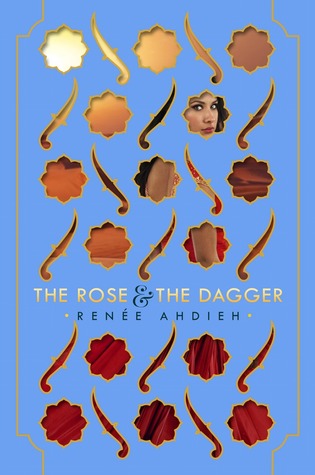
The Rose & the Dagger by Renee Ahdieh
This is the second and final book (the first is The Wrath & the Dawn) in a romantic, dramatic, adventurous and beautiful take on One Thousand and One Nights. This book started out slow, but picked up the pace to tie up all the loose ends. It’s kinda fun reading a duology instead of a trilogy! Actually, there are quite a few “alternate” chapters and storylines available as ebooks, but as much as I enjoyed reading this book, I was satisfied when it ended. It didn’t hit me as one of those “Aaahh I never want this universe to end!” books where you feel sad and a bit down for a week after you finish the book. I’ve read a few retellings of One Thousand and One Nights in the past couple years, but have never read the original. I guess with the live-action Aladdin coming out soon, it’s going to be popular to read, so I should get on that.

The Perks of Being a Wallflower by Stephen Chbosky
I’ve started watching Gilmore Girls and though I had never seen an episode before last month, I always knew that Rory and I had a lot in common. I’ve taken a glance through Rory's reading list, and we have similar tastes… meaning we read everything. What surprised me was how many of the books on her list that I have already read, and that made me want to read all the rest. I really love checking things off the list. So that’s why I read The Perks of Being a Wallflower. That, and I’ve heard of this book my whole life but had no idea what it was about.

If you like reading about precocious teenage boys (they’re so adorable), you’ll probably like this epistolary/diaristic book. The first part of the book comes across as advice for teenage readers that barely hides the fact that the adult author is trying to make the book a guide for any possible problem that a teenager could confront. But if you stick with it, the story develops and the preaching becomes more subtle. The characters face all kinds of heavy situations: drugs and alcohol as coping/self-medicating, abortion, rape, physical and sexual abuse, discovering sexuality in all kinds of ways, etc. If you’re a teen, it would be good to have an adult read it at the same time so you two could talk about it.

Though one of my favorite parts of the book is kind of preachy: Sam and Charlie have a heart-to-heart about what they think and the expectations they have regarding each other. It’s a really sweet and honest moment, but Sam confronts Charlie on what friendship really is—friendship is not going along and “being there” for everything your friend is doing. It’s confronting and telling your friends No if they are doing something that is not healthy. A good lesson for all of us.
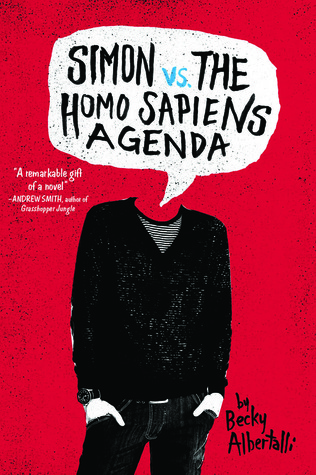
Review || Simon vs. the Homo Sapiens Agenda

After millions of people told me to read Simon vs. the Homo Sapiens Agenda, I have finally read it and can now join the masses in insisting that you should read it, too!

The wait list at my library for an ebook of Simon is many months too long. But while vacationing and checking out the new-to-me Vista Grande library in my hometown of Casa Grande, Arizona, I spied Simon there, clean and new and untouched, waiting for me to read it. Which I did in less than 24 hours. I fangirled to the poor circulation desk librarian about how these days all I read are ebooks and I really miss reading on paper and how the stack of books I grabbed have an endless wait list and are OMG popular. He seemed a bit surprised and not in on the world of YA fandom.

When I was younger in Casa Grande, I volunteered at the library, and my ‘boss’ was the children’s and youth librarian (who I now realize was a liberal gal who took a job in a small, conservative agricultural community). I really am grateful for the things she taught me and the experiences I had because of her. I think that if I got my master’s, it would be in library science with the goal of doing youth programming. Anyways, it’s symbolic to me that I was reading this book while being back in my home town, with my younger sister reading over my shoulder.

Simon is a teenage boy who is busy dealing with the drama of typical high school days and navigating just how exactly he should come out.

Not only is the plot well designed, but because author Becky Albertalli is a practicing child psychologist, the characters feel incredibly realistic and authentic. It didn’t read at all like an adult trying to use teenage jargon—it came across as a teenager using teenisms (which may make the book have a shorter shelf-life than normal, but it’s perfect for the moment).

Again, the author is a genius. She deliberately links emotions and physical actions to show that what someone is doing on the outside is a result of something going on on the inside, and those inside things are totally, completely normal. For example, at one point in the story, Simon is upset and having a conversation at the same time. After a moment, he realizes that he is yelling and he feels embarrassed about having a hard time controlling his voice level. It’s these types of details that separate believable YA from adults-writing-to-kids YA.

Simon’s fears and concerns are just so relatable. He talks about wanting to keep even small things as a secret from his family (really small: he started drinking coffee), because they turn everything into a big deal. I still do that! And in a completely non-preachy scene near the end of the book, Simon’s mom explains that as a parent, every new development is an amazing and exciting change, no matter how small. Like new moms posting with way too much TMI on Facebook, moms of teenagers are just as excited.

I wish I had read this book when I was younger, for the sake of realizing how normal my family and feelings really are. While I was reading it, I imagined myself as a youth librarian, recommending this book to someone and it changing their world so that they would remember it years later, even if they never talked to anyone else about it.

Grace and 'The Goldfinch'

I am two years late to The Goldfinch’s party, but I am not so insecure as to let that bother me. Donna Tartt’s tome still takes up a good amount of real estate in bookstores and libraries, and for good reason—the novel really is what many critics call a modern-day Dickensian tale.

A photo posted by Polly Fern © (@pollyfern) on


In short, the protagonist Theo Decker gives an account of how he came into possession of The Goldfinch, a small painting by Dutch Golden Age artist Carel Fabritius, and how that possession turned into a lifelong obsession which drove him to extraordinary adventures and contemplations of the role of fate. It’s basically Great Expectations with drugs, PTSD, and fine art.

A photo posted by Polly Fern © (@pollyfern) on


Although I did enjoy the story despite it having many passages filled with my pet-peeves— descriptions of dreams, drug-induced hallucinations, and drunken misadventures—the character development is what made this story great.

I fell in love with all of the characters to the point where I could overlook their flaws (their human flaws, not flaws in the writing), even in Theo’s closest pal Boris, who always shows up with bad decisions in his pockets. The characters are so well thought out that they effortlessly carry themselves through the nearly 800 pages. They lean a little towards the romanticized, this is being told through Leo’s foggy worldview remember, but never to the point that I stopped believing they could be real people.

A photo posted by Polly Fern © (@pollyfern) on


When reading a book review, I often think “blah blah okay character development is nice” and don’t give it the importance that I should. I should know myself better: I don’t like plot-driven stories, and I detest when it is obvious that the author doesn’t actually know how real people in the real world act. Give me characters or give me a blank notebook, I’ll write my own story thankyouverymuch. The reason why I am able to read and enjoy stories from so many different genres is testimony to this. Characters, no matter how different their personality is from my own, give me an idea as to how I would react in their situation and how to show grace to real people like them.

A photo posted by Polly Fern © (@pollyfern) on


The Goldfinch is not a perfect book. It shows human depravity, and what’s worse, at the end it preaches that perhaps sinning isn’t really anyone’s fault and we should just focus on the good things that happen.
So, why not stop then? I said.

Why should I?

Do I really have to say why?

Yeah, but what if I don’t feel like it?

If you can stop, why wouldn’t you?

Live by the sword, die by the sword, said Boris briskly, hitting the button on his very professional-looking medical tourniquet with his chin as he was pushing up his sleeve.

And as terrible as this is, I get it. We can’t choose what we want and don’t want and that’s the hard lonely truth. Sometimes we want what we want even if we know it’s going to kill us. We can’t escape who we are.
I get the feeling that The Goldfinch embodies the mainstream beliefs in our culture now (it did get the Pulitzer, after all), and that Theo is a representation of us Millennials. That our duty in life is to drift along, to try to make good decisions but shouldn’t be blamed if we end up making bad ones, and if two wrongs make a right…. then so be it. I completely disagree with this premise. So does the ancient wisdom written by Saint Paul:
All that passing laws against sin did was produce more lawbreakers. But sin didn’t, and doesn’t, have a chance in competition with the aggressive forgiveness we call grace. When it’s sin versus grace, grace wins hands down. All sin can do is threaten us with death, and that’s the end of it.

Grace, because God is putting everything together again through the Messiah, invites us into life—a life that goes on and on and on, world without end. So what do we do? Keep on sinning so God can keep on forgiving? I should hope not!

As long as you did what you felt like doing, ignoring God, you didn’t have to bother with right thinking or right living, or right anything for that matter. But do you call that a free life? What did you get out of it? Nothing you’re proud of now. Where did it get you? A dead end. (Romans 6, The Message)  
We are not slaves to fate. We do not have to do something bad to force karma to tip the balance of the scales in the world and create something good. On the contrary, I think we have to work all the harder to not only correct wrongs, but prevent them in the first place. And when our humanity fails us, which it will, we have grace to catch our fall.

Even though I think the message of the book is decidedly false, I would absolutely recommend this book. For,
It is the mark of an educated mind to be able to entertain a thought without accepting it.
- Aristotle

A photo posted by Polly Fern © (@pollyfern) on


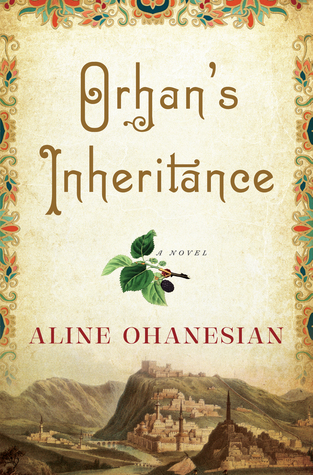
'Orhan's Inheritance' Knits Wounds Closed

When I had a layover in Istanbul last year, I decided to head to the tourist center and see as much as I could in eight hours. I looked decidedly foreign, twisting a map around and trying to orientate myself before choosing a metro line. An older gentleman approached me, and said that he was headed down to his carpet selling business that was right in that district. He seemed nice, and there were plenty of people around, so I decided to trust him.


After feeding me delicious Turkish cuisine, showing me around, cutting to the front of lines of tourists, he talked me into buying a handmade carpet from him. In Turkish and Persian culture, buying a rug is buying an investment, like gold. A quality rug that is large enough to fit under the dining room table will cost several thousand euros. And fine rug collectors are like fine art collectors. The more you know about the history, the age, the quality of the knots and materials, the upkeep, the higher the resale value. But ideally, you won’t resell your rug. You will keep it in the family and pass it down to your children for many generations. I bought a smaller, mid-range carpet that I could actually see myself using. I liked the colors and the way that it was purposefully woven with slits in the design.


When I got home, I tried to research more about my carpet. I wasn’t able to figure out much, but it made me more aware of the history and regions of Turkey. Even with skimming through articles on Wikipedia, and reading about the history of stories that are commonly woven into carpets, I still didn’t have a grasp on how historical events are currently affecting contemporary society. When I read the description of Orhan’s Inheritance, I was immediately interested in the book. It’s set in Turkey, and explores some of Turkey’s more recent history.


Orhan is a young man whose grandfather recently passed away. The grandfather willed the family business to Orhan, bypassing Orhan’s father, and left the family property to Seda, a woman that no one had ever heard of before. Orhan decides to go track this woman down and find out why she gets the property.

The story goes back and forth between WWI-era Turkey, following Seda’s narrative, and present-day with Orhan. It’s a beautifully woven tale that humanizes the politics of the time to show how it affected an average village in Turkey.

Seda is Armenian, and as such, is Christian. Armenians are a minority people-group in Turkey, and her family were the minority in a primarily Turkish-Muslim town. During this time, Turkey was undergoing political and cultural turmoil, which contributed to the start and execution of an ethnic cleansing. The Armenian people were the target.

Men were killed or taken to forced labor camps. Women, children, and the elderly, were led on death marches to concentration camps in the Syrian desert. Seda and her family suffer this.

As dense, heavy, and sorrowful as it is, the author, Aline Ohanesian, does a wonderful job of providing hope to the reader through Seda’s story. Though she loses track of faith, of God, of values and innocence, Seda doesn’t lose her will to live.

My historical education was less than stellar, so the Armenian Genocide was completely new for me. The Turkish government still denies the existence of the genocide. Ohanesian addresses the struggle that some of the Armenian diaspora are still grappling with today - how do we process through our mourning as a people if our offender still refuses to even acknowledge its sin?

It’s a difficult question to answer. Orhan’s Inheritance recognizes and educates readers about the atrocities that were committed. It brings peace to history because its characters reach peace with it. Gracefully, thoughtfully, delicately, the author knits together a tapestry that gives value to all Turkish people. Is this not what art is for?

I got a free e-ARC of this book, but that in no way affected my honest thoughts about it. The expected publication date is April 7, 2015, by Algonquin Books.

Update: For further reading, here's a NYT profile of Yasar Kemal that recommends a couple of his books: Yasar Kemal, Master Turkish Novelist and Strident Political Critic, Is Dead

Poking past The Hedgehog hype


Sometimes I am a little late to the conversation. I know everyone was talking about The Elegance of the Hedgehog back when it hit the English-speaking shelves in 2008. Six years later, I decided to dive in. (Speaking of being late to the game, Starbucks in Dubai just got seasonal pumpkin spice lattes for the first time…)

The story alternates between the confessional-style musings and conversational-style writings of a rich, super-intelligent Parisian tweenage apartment resident and an astute, menopausal concierge of the said apartment. On the surface level I enjoyed this book immensely—two people on opposite ends of the societal spectrum confront some of their assumptions about the other side and come out better because of it.

I read others’ reviews of it after I finished, and I must say that I have to hand it to the critics. These characters spend the whole book moaning about how other people just assume things about them based on appearances but they don’t really get to know them. But the same two people who are doing the complaining don’t put in the effort to push past the pokey defenses of their cold neighbors, either. I’ve seen this conversation happen before:

“I feel so left out because no one invites me to do anything.”
“Do you invite anyone to do anything either?”
“No, but I’m new here / not good at it / boring so I shouldn’t be the one to do it.”

Except in the book it sounded more like:

“No one wants to get to know who I really am.”
“Did you try to get to know who they really are?”
“No, but I’ve spent enough time with them to know that they don’t care about me / aren’t worth my time / aren’t intelligent enough / won’t provide me with effortless, meaningful conversation.”

Once I realized that, it soiled my impression of the book. But I will hold on to the parts that I liked and made the book worth the read. A truly beautiful aspect of the story was the timid friendship between Kakuro Ozu and the main character Renée Michel. Both middle-aged, both introverted and kind-hearted, both epicurean. Their friendship is one that was in its beginning stages of development, yet already so familiar and trusting. I wanted to become a part of that intimacy. It is a modified Cinderella and Prince Charming story, but with realistic people who are in the afternoon of their lives rather than their mornings, who come with some baggage and history, who are looking more for someone they can talk to than someone they can keep up appearances with.

And, call me out for being a girl who likes to read about romantic relationships (then go right on dissing Jane Austen while you’re at it), but I wish the book was more about that. I don’t wish the story had cut straight to the part where Prince Charming/Kakuro Ozu is introduced. I wanted the story to be longer, and I wanted them to enjoy each others’ lives more. And I wanted that precocious, pretentious 12-year-old to take her know-it-all self elsewhere.

Five First Lines from Japanese Lit

Here are the rules:
  1. Pick a section of a bookstore. I chose the Japanese lit section.
  2. Choose five interesting looking books, based on their covers.
  3. Tell us the first lines.


The Face of Another by Kobo Abe
At last you have come, threading your way through the endless passages of the maze.


No Longer Human by Osamu Dazai
I have seen three pictures of the man.


Strange Weather in Tokyo by Hiromi Kawakami (Apparently this book has also been published under the title “The Briefcase”.)
His full name was Mr. Harutsuna Matumoto, but I called him ‘Sensei’.

Gone to the Forest by Katie Kitamura
Tom hears the noise from across the hall.

Paprika by Yasutaka Tsutsui
Kosaku Tokita lumbered into the Senior Staff Room.

Seven Books for People Who Like the Color Yellow

Organizing a bookshelf according to color makes perfect sense to me — I am more likely to remember a book by its cover than its title or author. I went to a bookstore and did some color arranging of my own the other day. Though I wasn't interested in reading any of these books, I did have fun on this scavenger hunt through the YA section.


OMG! I'm in Love With a Geek! by Rae Earl
Tape by Steven Camden
Exile by Kevin Emerson
Innocent by Anne Cassidy
Burned by P.C. & Kristin Cast
Struck by Lightning: The Carson Phillips Journal by Chris Colfer

I found this book on my way out:


When Mr. Dog Bites by Brian Conaghan


What color should I hunt for next?

One Hundred Years of Solitude: Does anyone else have trouble remembering what it is about?

If you ask me: Hey, what is that book about that you said you really liked? I will probably give a vague response that will leave you thinking that the summary I just gave could have been about any number of books. I have had multiple embarrassing conversations at the reference desk of a bookstore that all went something like this...