Showing posts with label totally in love. Show all posts

5 Reasons 'A Tale for the Time Being' is Worth Your Time

A Tale for the Time Being

A Hello Kitty box washes up on the shores of a small island in British Columbia, where it is deemed trash by Ruth, and picked up to be thrown away later. Ruth’s husband Oliver satisfies his curiosity by opening the box, finding a diary and old letters. When Ruth begins reading the diary, the perspective changes to that of the diary’s writer, a Japanese teenager named Nao. Nao plans to write about her Buddhist nun great-grandmother Jiko, but reveals more about her personal life and struggles in the process.

Nao and Ruth are imperfect yet intriguing mirrors of each other. Both were placed involuntarily into a culture that they didn’t ask for and don’t want to accept. They remain convinced that their former lives would have freed them from all of their current problems. For Nao, this means her life in Silicon Valley where her dad was a programmer, before he lost his job and had to move the family back to Tokyo. For Ruth, this means her life in New York City, where she was filled with inspiration to write and had many like-minded friends. Both process the suffocating isolation that is their new lives by biting their tongues until withholding their thoughts is no longer possible.

I’m still reeling from trying to process all that occurred in A Tale for the Time Being. I listened to this as an audiobook, beautifully narrated by the author, Ruth Ozeki. After the book ended, she explained that the physical book has footnotes, appendices, and illustrations that greatly enrich the story, and understandably, those simply can’t be conveyed in an audio format. Even without those, the story is bursting with influences from esoteric sources. To condense my thoughts on the novel, without giving away spoilers or re-writing the book, I think it would be easiest to explain why I loved it by concentrating on five points:

5. It’s meditative yet brilliantly paced.
To me, when I read a book, good timing is more important than plot. This book delicately balances descriptions of Buddhist funeral rites and of Pacific Ocean current patterns while still moving the plot forward. I enjoyed pondering the subjects that needed a little more brain power as much as I enjoyed the parts where characters raced against time.

4. It digests recent historical events into our cultural metanarrative.
9/11, the Fukushima Daiichi tsunami and nuclear disaster, and the lingering effects of WWII are things that we as a culture are continuing to process. It seems that every year Hollywood retells war stories completely fascinated with violence. How can we not be fascinated by it? We live beside it. And there’s no doubt that this attempt at storing our violent histories is similar to storing the nuclear wastewater in underground tanks—it cannot be contained and is bound to seep out into our culture. A Tale for the Time Being subliminally relates the prevalence of violence through the horrific bullying of its characters. But grandma Jiko uses the Buddhist perception of eternity to teach an alternate way to accept violence. I’m thankful for Ozeki’s work in this area by opening up other narrations of history and hopefully permeating our collective conscience.

3. It addresses ups and downs of being bicultural.
Nao lived most of her life in Southern California, and Ruth clearly identifies as being from NYC. Ruth, who is Japanese-American, and Nao, who is, practically speaking, American-Japanese, both wince with questions like: You are Japanese, why can’t you do this? Or the pregnant expectations of: You live here now, why don’t you act like us? The truth is, it’s not that simple. But one of the benefits of being bicultural is that, while they may not perfectly fit into either culture, they are able to form a relational bridge between both.

2. Ecology, theoretical quantum physics and Zen Buddhism are seamlessly blended.
Don’t be intimidated! Thankfully, Ruth also doesn’t have much of a grasp on these subjects, and other characters come alongside to teach her. It can come off as preachy or patronizing, but it’s worth the sacrifice to be able to connect the dots and follow the path the author is taking you down. In Jiko’s view, science and Buddhism don’t conflict at all. In fact, they have been supporting each other all along. This part isn’t overly-explained, and I loved the enlightened feeling I got when I was able to reach the conclusions on my own.

1. The writing is eloquent and breathtaking.
At times I was giggling, other times I was reverent, but at all times I appreciated the deliberate care and consideration that Ozeki put into crafting this story.

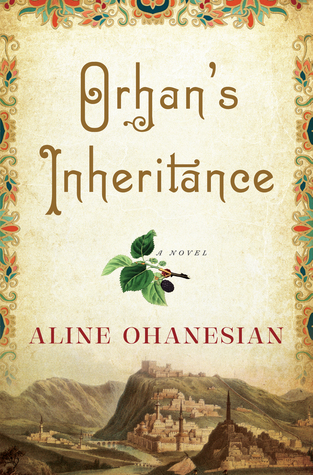
'Orhan's Inheritance' Knits Wounds Closed

When I had a layover in Istanbul last year, I decided to head to the tourist center and see as much as I could in eight hours. I looked decidedly foreign, twisting a map around and trying to orientate myself before choosing a metro line. An older gentleman approached me, and said that he was headed down to his carpet selling business that was right in that district. He seemed nice, and there were plenty of people around, so I decided to trust him.


After feeding me delicious Turkish cuisine, showing me around, cutting to the front of lines of tourists, he talked me into buying a handmade carpet from him. In Turkish and Persian culture, buying a rug is buying an investment, like gold. A quality rug that is large enough to fit under the dining room table will cost several thousand euros. And fine rug collectors are like fine art collectors. The more you know about the history, the age, the quality of the knots and materials, the upkeep, the higher the resale value. But ideally, you won’t resell your rug. You will keep it in the family and pass it down to your children for many generations. I bought a smaller, mid-range carpet that I could actually see myself using. I liked the colors and the way that it was purposefully woven with slits in the design.


When I got home, I tried to research more about my carpet. I wasn’t able to figure out much, but it made me more aware of the history and regions of Turkey. Even with skimming through articles on Wikipedia, and reading about the history of stories that are commonly woven into carpets, I still didn’t have a grasp on how historical events are currently affecting contemporary society. When I read the description of Orhan’s Inheritance, I was immediately interested in the book. It’s set in Turkey, and explores some of Turkey’s more recent history.


Orhan is a young man whose grandfather recently passed away. The grandfather willed the family business to Orhan, bypassing Orhan’s father, and left the family property to Seda, a woman that no one had ever heard of before. Orhan decides to go track this woman down and find out why she gets the property.

The story goes back and forth between WWI-era Turkey, following Seda’s narrative, and present-day with Orhan. It’s a beautifully woven tale that humanizes the politics of the time to show how it affected an average village in Turkey.

Seda is Armenian, and as such, is Christian. Armenians are a minority people-group in Turkey, and her family were the minority in a primarily Turkish-Muslim town. During this time, Turkey was undergoing political and cultural turmoil, which contributed to the start and execution of an ethnic cleansing. The Armenian people were the target.

Men were killed or taken to forced labor camps. Women, children, and the elderly, were led on death marches to concentration camps in the Syrian desert. Seda and her family suffer this.

As dense, heavy, and sorrowful as it is, the author, Aline Ohanesian, does a wonderful job of providing hope to the reader through Seda’s story. Though she loses track of faith, of God, of values and innocence, Seda doesn’t lose her will to live.

My historical education was less than stellar, so the Armenian Genocide was completely new for me. The Turkish government still denies the existence of the genocide. Ohanesian addresses the struggle that some of the Armenian diaspora are still grappling with today - how do we process through our mourning as a people if our offender still refuses to even acknowledge its sin?

It’s a difficult question to answer. Orhan’s Inheritance recognizes and educates readers about the atrocities that were committed. It brings peace to history because its characters reach peace with it. Gracefully, thoughtfully, delicately, the author knits together a tapestry that gives value to all Turkish people. Is this not what art is for?

I got a free e-ARC of this book, but that in no way affected my honest thoughts about it. The expected publication date is April 7, 2015, by Algonquin Books.

Update: For further reading, here's a NYT profile of Yasar Kemal that recommends a couple of his books: Yasar Kemal, Master Turkish Novelist and Strident Political Critic, Is Dead

Totally in love with Maddy Kettle: The Adventure of the Thimblewitch

Beautiful, whimsical, enchanting, playful. I tore through Maddy Kettle: The Adventure of the Thimblewitch and needed to see more; there simply isn’t enough of author-illustrator Eric Orchard’s work. Unfortunately, a scrounge around the web revealed little more than some old interviews and that he graduated from the Nova Scotia College of Art and Design (does he earns points just for being Canadian?). Online, he is frequently referred to as “an up-and-coming illustrator.” I think it’s safe to say that he has arrived.

(source)

Maddy is an Arizona girl (holla!) who needs to turn her parents, currently an adorable pair of kangaroo rats, back into humans. Her adventures lead her to fantastical creatures, magical machinery, and delightful surprises. Some scenes are reminiscent of Dorothy visiting Oz.


Others, of Jules Verne and H.G. Wells—a steampunk aesthetic quietly seeps into many frames.


Besides the talent and skill with the individual illustrations, the momentum between frames is what takes this book to another level. Look at this page: a chain reaction from the first frame causes the banjo string to snap in the second, a zoom out in the third frame flavours the entire page with humour and drama, and now we know why Maddy is looking down in frames four and five.


Yes, this is a children’s graphic novel. But it is more than that. It is a work of art. I want it for my (future) children. But I also want it for me.

(note: I received this as an ARC ebook for free, but that didn’t affect my opinions stated here)