Showing posts with label diversity. Show all posts

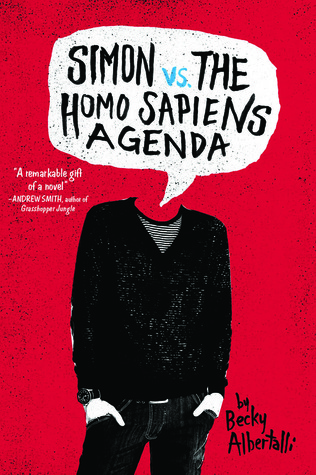
Review || Simon vs. the Homo Sapiens Agenda

After millions of people told me to read Simon vs. the Homo Sapiens Agenda, I have finally read it and can now join the masses in insisting that you should read it, too!

The wait list at my library for an ebook of Simon is many months too long. But while vacationing and checking out the new-to-me Vista Grande library in my hometown of Casa Grande, Arizona, I spied Simon there, clean and new and untouched, waiting for me to read it. Which I did in less than 24 hours. I fangirled to the poor circulation desk librarian about how these days all I read are ebooks and I really miss reading on paper and how the stack of books I grabbed have an endless wait list and are OMG popular. He seemed a bit surprised and not in on the world of YA fandom.

When I was younger in Casa Grande, I volunteered at the library, and my ‘boss’ was the children’s and youth librarian (who I now realize was a liberal gal who took a job in a small, conservative agricultural community). I really am grateful for the things she taught me and the experiences I had because of her. I think that if I got my master’s, it would be in library science with the goal of doing youth programming. Anyways, it’s symbolic to me that I was reading this book while being back in my home town, with my younger sister reading over my shoulder.

Simon is a teenage boy who is busy dealing with the drama of typical high school days and navigating just how exactly he should come out.

Not only is the plot well designed, but because author Becky Albertalli is a practicing child psychologist, the characters feel incredibly realistic and authentic. It didn’t read at all like an adult trying to use teenage jargon—it came across as a teenager using teenisms (which may make the book have a shorter shelf-life than normal, but it’s perfect for the moment).

Again, the author is a genius. She deliberately links emotions and physical actions to show that what someone is doing on the outside is a result of something going on on the inside, and those inside things are totally, completely normal. For example, at one point in the story, Simon is upset and having a conversation at the same time. After a moment, he realizes that he is yelling and he feels embarrassed about having a hard time controlling his voice level. It’s these types of details that separate believable YA from adults-writing-to-kids YA.

Simon’s fears and concerns are just so relatable. He talks about wanting to keep even small things as a secret from his family (really small: he started drinking coffee), because they turn everything into a big deal. I still do that! And in a completely non-preachy scene near the end of the book, Simon’s mom explains that as a parent, every new development is an amazing and exciting change, no matter how small. Like new moms posting with way too much TMI on Facebook, moms of teenagers are just as excited.

I wish I had read this book when I was younger, for the sake of realizing how normal my family and feelings really are. While I was reading it, I imagined myself as a youth librarian, recommending this book to someone and it changing their world so that they would remember it years later, even if they never talked to anyone else about it.

Reading African-American Authors

Norma Impressions by Kara Walker (source)

A few months ago, I loaded up my twitter account with a lot of book critics, educators, and activists who are involved with the #WeNeedDiverseBooks campaign. I wanted to know what kinds of conversations they were having, and why. At first I didn’t understand a lot of academic-y terms they threw around, so I had to google and read a ton. I still have to google, but I’ve gained a lot of understanding into the conversation. Every day there is something new, but it really can be boiled down to: White people, why aren’t you listening?

I know I have a case of white guilt that has more than once tempted me to unfollow and stop listening because I feel ashamed and out of place. I don’t dare chime in to the conversation because these women are fierce, strong, educated, and I would be both out of line and out of my league to think that I had something to add. This has been humbling in a painful way.

Sometimes I want to feel like I belong with them because I’m a woman living in a severely misogynistic society (After I moved to Brazil, I understood why women become anorexic out of an attempt at control over their own bodies… I struggle with eating in certain situations here). But I can’t say I face the same thing that a woman of color is up against; I consciously use my race and gender to get in and out of situations that other people would not be able to, and I have done so my whole life. For example, one time I boarded a plane without any form of legal ID because I had forgotten and packed mine in my checked luggage. I can think of scores of personal examples like this.

I know a British guy who is so quick to point out horrendous racial crimes that ‘my people’ have done. I think it’s because he is deeply insecure and tries to criticize others whenever possible. But I was so gleefully happy when I read Longbourn and the global capitalist inheritance system clicked into place in my brain: white Americans got rich from the bodies of slaves, but so did white Englishmen, and even if this guy I know did grow up poor and does have ancestors who slaved in the fields as he so frequently claims, he too is reaping the profits of slavery by the mere fact that he was able to afford a university education and make a living using his native language in Brazil. There is a reason that English teachers are in such worldwide demand, and it is directly linked to money that was made by, cities that were built by, and advantages that were gained by African bodies.

The thing I've learned (that this dudebro doesn’t understand yet) is that white privilege does not mean an absence of hardship of any kind. L.L. McKinney tweeted recently: ...yes. All white people are privileged. No this does not mean they don’t struggle or are not marginalized in some form fashion. (source)

Nowadays, I’m careful to check out an author before I bother checking out a book. I’m pretty tired of reading books by white men. Not because white men are evil, but because I’ve been reading books by them my entire life and I’m ready to stop now. There’s lots of other people who deserve to be heard, and a lot more that I need to learn that I’m not going to learn by listening to the same thing all the time.

My Recent Reads

Just Mercy (Bryan Stevenson)
Stevenson is a lawyer working primarily in Alabama, fighting against injustice (racism and otherwise) in the criminal justice system.

Between the World and Me (Ta-Nehesi Coates)
A letter from a father to his teenage son about what it means to have a black body in a country that constantly seeks to control it.

The Book of American Negro Poetry
(various, ed. James Weldon Johnson)
An anthology that sets out to prove that African American poets are equal and often superior to white poets.

Horses Make a Landscape Look More Beautiful: Poems (Alice Walker)
Tangible and accessible poetry that contemplates race, exploitation, and colonialism.

Parable of the Sower duology (Octavia E. Butler)
Set in a dystopian America, a strong, young black woman makes her way from Southern California to better lands in the north, all the while developing a new religion based on acceptance and equality.


Good Links

Lemonade Syllabus (and on Goodreads so you can add 'em to your TBR already.)
The Sublte Linguistics of Polite White Supremacy (an essay by @YawoBrown)
White Fragility (an essay by Robin DiAngelo)

Looking for Romance and Finding Friendship in Will Grayson, Will Grayson

Will Grayson, Will Grayson cover


*Contains very minor spoilers! Ye have been warned!!*

Will Grayson, Will Grayson was my first exposure to both John Green and David Levithan, the ever-so-trendy YA authors. It’s like a crime that I call myself an avid YA lit consumer, and haven’t read The Fault in Our Stars or Boy Meets Boy. This was also my first time reading a book with LGBTQ prominent characters. Dumbledore doesn’t count, you guys.

At first, I was a bit averse to picking this book up on account of its being stuck in the GAY & LESBIAN genre. There are multiple sides to the genre debate, I know because my boyfriend and I argue about genre labels all the time. On the one hand, It makes it easier to find books with topics you are interested in, but on the other, it’s also possible that the label will turn you off from reading a book that you would actually enjoy because you didn’t like the last book you read in that genre. I just always assumed that a book filed under “Gay & Lesbian” as one of its defining characteristics wouldn’t interest me. I mean, even if I read a book with straight characters who are thinking of / talking about / taking action on sexual thoughts all the time, I’m not too interested. I usually breeze through those parts and judge the author. So I always thought, “Well, the only way this book would have enough content to be in this category is if the characters are all lusty all the time.”

Will Grayson, Will Grayson isn’t like that. It does have a couple gay characters: one of them is stereotypical (likes musicals, says words like “FABulous”, makes it clear who is hot and who is not) but the other is not. The other, Will Grayson, is an average lower-middle class teenager growing up in suburban America, struggles in a single-parent home, takes medications for depression and anxiety, is unaware of how arrogant and self-absorbed he is, and gets butterflies in his stomach about holding hands with his crush. He is a remarkably realistic, believable character, and more importantly to me, was not what I imagined when I read the label that he came with.

The book is set up so that the chapters alternate between two characters. In the first hunk of the book, the times remain consistent, so when one chapter ends at say, 3pm on Tuesday, the next chapter will start at 3pm on Tuesday. One uses proper formatting, the other uses all lowercase (because I was reading an e-ARC, I assumed the final edits weren’t done yet...true story). Besides this, you don’t get a lot of clues that you are reading about different people until about 25% of the way through the book.

Now, I assume you are a much more clever person than I, because it took me an embarrassingly long time to figure out that, guys, there are TWO WILL GRAYSONS in the book. They are completely separate characters who happen to have the same name. There is no magical explanation of alternate realities or changing space time or reincarnation. It does not get awkward super weird Freudian theory puzzling and they don’t fall in love with each other. Read in peace. Because I certainly didn’t.

Straight Will has basically everything in life going for him: chill parents with well-paying jobs, good looks, good connections, and a super cool standoffish attitude that doesn’t allow him to get sucked into school drama. Gay Will, as I mentioned, is a little more believable. Both Wills struggle with expressing their emotions and have trouble when it comes to commitment in romantic relationships. But ultimately, the story isn’t about romance. It’s about friendship.

Will Grayson and Will Grayson have a mutual friend named Tiny. Tiny has a big build, a big personality, a big presence, and is pretty mature for his age. He is always going out of his way to build confidence in other people, and he looks outside of himself to push and encourage those around him to reach further. Though Tiny plays a supporting role in this book, he actually is the one that ties the whole story together. In the end, the two Wills emerge from their self-absorbed bubbles and work together to show Tiny how much he is appreciated.

This book was an enjoyable read, it surprised me in really good ways, and it has a refreshing emphasis on healthy friendships (not psycho lust interests like so many other YA books that SHALL NOT BE NAMED). It definitely broadened my horizons and showed me some of my own biases. Read it, it’ll be good for you!

I got an e-ARC for review purposes, but that in no way affected my honest opinion.

World Book Day || Authors from Around the World

cartoon world map
source

Happy World Book Day! I realize that World Book Day is more for…young children, but I liked the idea of it. In celebration, I’d like to recommend recognize some books by authors from around the world. Yeah, I’m hijacking this day.

Africa || Season of Migration to the North by Tayeb Salih
This is a beautiful story that gives an immense sense of culture and place. A Sudanese man goes to study in the UK and sleeps with women because they are exotic. It turns out that women sleep with him for the same reason. After he returns back to his culture, he mourns his loss of cultural identity--being neither anymore from ‘here’ nor ‘there’.

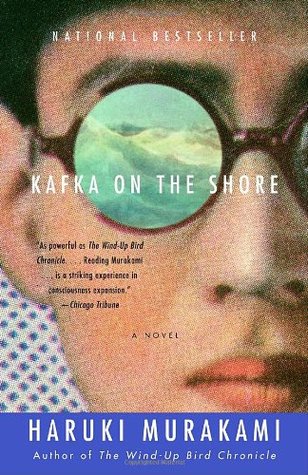
Asia || Kafka on the Shore by Haruki Murakami
I love Murakami and will take every opportunity to sing his praises. I’ve read many of his books, and Kafka on the Shore is one of my favorites. A boy, Kafka, runs away from home, has strange, subversive, and dark magical realism-ish adventures, and as you would expect, there are cats. Lots.

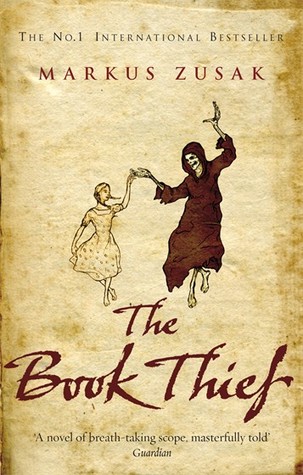
Australia || The Book Thief by Markus Zusack
Listen to the audiobook and you will not regret it. You may regret wearing mascara though. Set in WWII Germany, a compassionate (though not particularly soft) couple takes in young Liesel, and later on a Jewish man. As Liesel’s world begins to open up through a stubborn love of books, it is physically drawn smaller as the war marches onward.

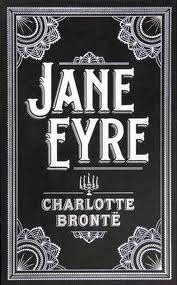
Europe || Jane Eyre by Charlotte Brontë
Orphan Jane is abused by all whom she should be able to trust. After she is hired by Mr. Rochester to become a governess, she begins to unravel his secret and unconventional life, which wraps her up in its dark mysteries as well.

North America || Happy Birthday or Whatever by Annie Choi
This is a hilarious memoir about balancing the expectations of your family’s culture with the culture that you live in. Annie is Korean-American and her conversations with her mom had me in tears. If bicultural identity isn’t the thing that has made North America the way it is, then I don’t know what to tell you. PS Here’s a fun interview with the author.

South America || Dom Casmurro by Machado de Assis
Don’t let the fact that this is a classic Brazilian novel published towards the end of the 19th Century scare you off. This isn’t one of those books that has a bazillion (a brazillion?) cultural references that you won’t be able to understand (I’m giving a stink eye at you, The Tale of Genji). Told from the first person perspective of Bento, he recounts his relationship with his lover from childhood up to old age. But as the story progresses, you realize that not everything is as it seems to be, and it finishes with a haunting question that not only drives Bento mad, but continues to plague Brazilians today: Did she do it?

Leave a comment and tell me some of your international favorites!