Showing posts with label japan. Show all posts

3 Graphic Novel Mini-Reviews

Saturday is Free Comic Book Day! (Pss… Check here to see who nearby is participating.) Yeah yeah I know the difference between graphic novels and comic books, BUT in honor of illustrated story telling, here are some graphic novels I read recently!

Low, Vol 1: The Delirium of Hope by Rick Remender
In the future, the sun is on the verge of death and its solar rays are out of control. Humans live in underwater colonies to be protected from the sun, but the air supply is going sour and one ridiculously optimistic woman believes she has a way to save humanity… and her family. Full-color, richly illustrative, of course I love the way that undersea animals have evolved into beautiful scary creatures.
For fans of: metaphysics (the plot revolves around if positive thinking determines reality), dystopias, light sci-fi

Wayward, Vol 1: String Theory by Jim Zub, Steven Cummings, John Rauch
A teenage girl who grew up in Ireland moves in with her Japanese mom in Tokyo. She discovers she has supernatural powers to see things that other can’t. The infusion of Japanese mythology, full-color beautiful art, realistic Tokyo scenes, and interesting characters was fantastic.
For fans of: Miyazaki’s Spirited Away, contemporary stories based in Japan but not manga per se.

Twisted Dark, Volume 1 by Neil Gibson
A collection of dark short stories which feature recurring characters (if you can spot them!). The art styles vary and the plots are all totally different. The writing is pretty straightforward, but it’s interesting. I was most interested in the story about human slavery in the United Arab Emirates, because I used to live there. It was extremely accurate of what really happens, and the illustrations were so realistic that I could recognize specific parts of the city.
For fans of: text-reliant graphic novels, Alan Moore


Poet’s Corner || Salad Anniversary by Machi Tawara


I don’t read poetry very much, mostly because I’m intimidated by it. I want to understand it so badly, but I get this feeling that I’m doing it wrong. And I know I’m not alone in doubting myself.

It was liberating to read this essay by Elisa Gabbert, a poet and poetry critic, where she admits that she doesn’t always get poetry. She also declares that when poetry critics complain that a bad poem is just ‘prose chopped into lines,’ they are forgetting something: ‘Poetry is just prose chopped into lines.’ Reading that tripped a switch in my brain. I spend hours a week reading prose without so much as a quiver, so what’s my problem with poetry?

My very smart and talented poet friend Jeevan Narney once visibly gagged when I told him that I was enjoying the poems of Billy Collins. Billy Collins is the poet for the masses, evidenced by his two-time U.S. Poet Laureate title. Yeah, he’s kitschy, but is that really so bad? I can listen to Billy Collins poems while I’m driving, and understand them enough to chuckle, and that’s ME having a GOOD TIME with POETRY.

Japanese poet Machi Tawara had a collection of poetry that went viral in the late 1980’s. It’s sold over 2.5 million copies to-date, inspired TV shows, a film, other poetry collections, etc etc. It’s a huge success. Salad Anniversary, as the English translation is called, recently got a facelift by Pushkin Press, and I requested a review copy of it. Poetry that the masses enjoyed? Must be up my alley. It turns out that my guess was correct: this is a perfect read if you want to enjoy the structure of poetry, would like something that our references our contemporary condition, and is light yet thoughtful.

Tawara writes about the problems of modern love (from an introvert’s perspective, for sure), daily life, family relationships, and self-doubts. Even though she’s Japanese, and didn’t have to deal with eHarmony or Tindr when she was writing it, it’s super easy to nod along, smile ruefully because it’s true, and see yourself in her words.

Ponder this for example. In the midst of longing for her relationship with her lover to have been more matured than it really was, she writes:

thinking of the slender margin
between unreal and real
     “Today only!”
Red blouse in the window, on sale each time I go by

It’s clever, right? And understandable. Here’s to more Poet’s Corner posts in the future!

Books that Made Me 'Meh'


I read three books recently, none of which grabbed me. Rather than making whole posts about books I don’t care about, here are three teeny-tiny mini reviews!

A Bride’s Story by Kaoru Mori
This manga has tons of things I’m interested in: a Mongolian bride struggles with the differences between her culture and fitting into her new husband’s culture along the Silk Road in the 19th century. I LOVE that setting, and Mongolians remain the coolest people on the planet IMHO (see here for proof). I stopped reading after the first volume because I was totally creeped out that the bride, who is significantly older than the groom, has more of a mother-son relationship than a husband-wife one. And like, they jump between the two types all the time. Even if that kind of relationship is acceptable in other cultures, it made me unable to enjoy the rest of the otherwise beautiful story. Want to see my expression the entire time?


Akira by Katsuhiro Otomo
I want to read some influential, important manga works, and lots of people recommend Akira. Post-WWIII Tokyo, and multiple factions are struggling for power, information, and a WMD government experiment known as Akira. In theory it’s a cool story, but even while I was reading the penultimate volume 5, I wasn’t eager to make it to the final volume 6. I think there are so many characters that the character development is spread too thin. With the exception of two characters who undergo dramatic changes, we don’t really see any individual progress. It just isn’t the manga for me.

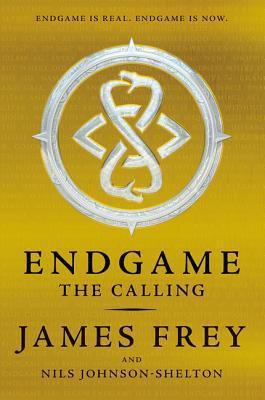
Endgame: The Calling by James Frey
Twelve teenagers from all over the world, who have been training their whole lives to kill each other in Endgame, battle it out in a world-crossing adventure. It’s like Battle Royale, James Bond (they have zero hindrances in regards to money, weapons technology, fake IDs, or being stopped by guys with guns), and Hunger Games, + alien overlords. Though I like the idea of how this book pairs clues and secret messages with internet adventures that gives clever readers the chance at winning real-life gold, the story for the story’s sake is predictable and poorly executed.

And don’t get me started on the theme of, “Yay for diversity, we have characters from all over the world! … in order to determine WHOSE RACE IS THE BEST.” I’m crossing my fingers that the characters stop fighting under this purpose in future books.

ps I got Endgame as an e-ARC from Netgalley, but that obviously didn’t change my opinion of the book.

5 Reasons 'A Tale for the Time Being' is Worth Your Time

A Tale for the Time Being

A Hello Kitty box washes up on the shores of a small island in British Columbia, where it is deemed trash by Ruth, and picked up to be thrown away later. Ruth’s husband Oliver satisfies his curiosity by opening the box, finding a diary and old letters. When Ruth begins reading the diary, the perspective changes to that of the diary’s writer, a Japanese teenager named Nao. Nao plans to write about her Buddhist nun great-grandmother Jiko, but reveals more about her personal life and struggles in the process.

Nao and Ruth are imperfect yet intriguing mirrors of each other. Both were placed involuntarily into a culture that they didn’t ask for and don’t want to accept. They remain convinced that their former lives would have freed them from all of their current problems. For Nao, this means her life in Silicon Valley where her dad was a programmer, before he lost his job and had to move the family back to Tokyo. For Ruth, this means her life in New York City, where she was filled with inspiration to write and had many like-minded friends. Both process the suffocating isolation that is their new lives by biting their tongues until withholding their thoughts is no longer possible.

I’m still reeling from trying to process all that occurred in A Tale for the Time Being. I listened to this as an audiobook, beautifully narrated by the author, Ruth Ozeki. After the book ended, she explained that the physical book has footnotes, appendices, and illustrations that greatly enrich the story, and understandably, those simply can’t be conveyed in an audio format. Even without those, the story is bursting with influences from esoteric sources. To condense my thoughts on the novel, without giving away spoilers or re-writing the book, I think it would be easiest to explain why I loved it by concentrating on five points:

5. It’s meditative yet brilliantly paced.
To me, when I read a book, good timing is more important than plot. This book delicately balances descriptions of Buddhist funeral rites and of Pacific Ocean current patterns while still moving the plot forward. I enjoyed pondering the subjects that needed a little more brain power as much as I enjoyed the parts where characters raced against time.

4. It digests recent historical events into our cultural metanarrative.
9/11, the Fukushima Daiichi tsunami and nuclear disaster, and the lingering effects of WWII are things that we as a culture are continuing to process. It seems that every year Hollywood retells war stories completely fascinated with violence. How can we not be fascinated by it? We live beside it. And there’s no doubt that this attempt at storing our violent histories is similar to storing the nuclear wastewater in underground tanks—it cannot be contained and is bound to seep out into our culture. A Tale for the Time Being subliminally relates the prevalence of violence through the horrific bullying of its characters. But grandma Jiko uses the Buddhist perception of eternity to teach an alternate way to accept violence. I’m thankful for Ozeki’s work in this area by opening up other narrations of history and hopefully permeating our collective conscience.

3. It addresses ups and downs of being bicultural.
Nao lived most of her life in Southern California, and Ruth clearly identifies as being from NYC. Ruth, who is Japanese-American, and Nao, who is, practically speaking, American-Japanese, both wince with questions like: You are Japanese, why can’t you do this? Or the pregnant expectations of: You live here now, why don’t you act like us? The truth is, it’s not that simple. But one of the benefits of being bicultural is that, while they may not perfectly fit into either culture, they are able to form a relational bridge between both.

2. Ecology, theoretical quantum physics and Zen Buddhism are seamlessly blended.
Don’t be intimidated! Thankfully, Ruth also doesn’t have much of a grasp on these subjects, and other characters come alongside to teach her. It can come off as preachy or patronizing, but it’s worth the sacrifice to be able to connect the dots and follow the path the author is taking you down. In Jiko’s view, science and Buddhism don’t conflict at all. In fact, they have been supporting each other all along. This part isn’t overly-explained, and I loved the enlightened feeling I got when I was able to reach the conclusions on my own.

1. The writing is eloquent and breathtaking.
At times I was giggling, other times I was reverent, but at all times I appreciated the deliberate care and consideration that Ozeki put into crafting this story.

What We Talk About When We Talk About Colorless Tsukuru Tazaki and His Years of Pilgrimage


The first Haruki Murakami book that I ever read was 1Q84. It was written like nothing I had ever read before—magical, calm, layered, connected, obscured, symbolic. Over the next couple years, I made my way through more of his books, as my local used bookstore and library allowed. Norwegian Wood, Kafka on the Shore, and After Dark were all enjoyable, but they didn’t give me the same high that I had been searching for since I lapped up the final pages of 1Q84.

I approached Colorless Tsukuru Tazaki and His Years of Pilgrimage with high expectations. I pushed away the thought that perhaps the reason that the majority of Murakami’s books don’t match up to 1Q84 means that 1Q84 is more of an anomaly than a rule. “Naah,” I told myself, “1Q84 was the last book published before Colorless, and it represents a newer and better leaf in his career.” I avoided reading any reviews, so as to preserve every drop of a virgin reading experience, but I was so certain that Colorless would be even better than 1Q84 because of how much display area it got in bookstores. Good marketing does not a good novel make.

The basic plot: middle aged Tsukuru has trouble forming and keeping relationships with other people, and it’s not because he is on the Autism spectrum (though his train station obsession hints at that). His close group of high school friends broke up with him out of nowhere, and that experience hurt him so badly that he has been apathetic about getting close to people ever since. When his love interest detects that he has a psychological block, she quests him with reconnecting with his friends and tying up loose ends.

Many people compare Colorless to Norwegian Wood, and I agree with making that comparison. Both center on unhealthy relationships that the main male character needs to address before he is able to move on with his life. Both of them have an older female character who intuitively knows what the main character needs to do and tells him so. Neither of them have magical or occultish themes like we see in Kafka on the Shore and 1Q84.

source
I guess it’s important to remember that Norwegian Wood was Murakami’s breakthrough novel, and the one that endeared him to the Japanese public. So there are people out there, millions of them, who enjoy reading about ruminating on old relationships in Murakami’s slow, steady, rainy-day way. And besides Japan, it seems that the whole Man Booker Prize committee also enjoys this (read five prize winners in a row and you’ll see what I mean). But personally, I don’t have lingering regrets about past relationships, or discontentment with my current one, and I wasn’t able to identify with any of Tsukuru’s problems. I’m thankful for this. Maybe when I reach middle-age, I’ll feel regrets about the what-if’s in my life, but I doubt it. Not dwelling on the past is one of my coping mechanisms and is important to my worldview.

So, I was fundamentally disappointed with the plot, but all the other Murakami hallmarks were there to redeem it. The linguistic style is smooth and calculated, the pace moves in a contemplative and careful manner, and as always, it gave me a desire to go live in Japan and be an introspective, clean, reserved, polite person. And listen to records and pet cats.

Five First Lines from Japanese Lit

Here are the rules:
  1. Pick a section of a bookstore. I chose the Japanese lit section.
  2. Choose five interesting looking books, based on their covers.
  3. Tell us the first lines.


The Face of Another by Kobo Abe
At last you have come, threading your way through the endless passages of the maze.


No Longer Human by Osamu Dazai
I have seen three pictures of the man.


Strange Weather in Tokyo by Hiromi Kawakami (Apparently this book has also been published under the title “The Briefcase”.)
His full name was Mr. Harutsuna Matumoto, but I called him ‘Sensei’.

Gone to the Forest by Katie Kitamura
Tom hears the noise from across the hall.

Paprika by Yasutaka Tsutsui
Kosaku Tokita lumbered into the Senior Staff Room.