Showing posts with label YA. Show all posts

This Week in Reading: Week 1

I challenged myself to read 100 books in 2017. Last year when I challenged myself to read 52, I didn’t think that I would actually read that many. I want to read 52 books every year, but I don’t really care too much if I complete that amount or not—the page count varies so much in the types of books that I like to read that reading a full 52 books doesn’t matter much to me. Consequently, I had never done it before. But in 2016, I surpassed my goal by some 40 books! And I read a wider range of things than ever. I was purposefully seeking out books by foreign and minority authors (in addition to reading whatever caught my fancy at the moment).

All this to say, I’m going to continue reading a lot of books this year, and I think I can read at least 100.
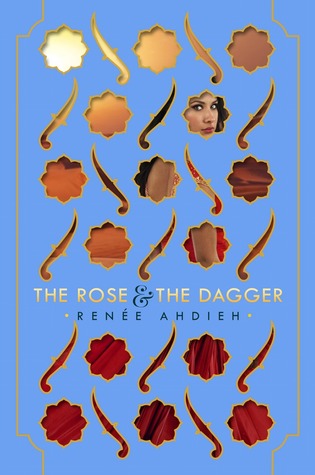
The Rose & the Dagger by Renee Ahdieh
This is the second and final book (the first is The Wrath & the Dawn) in a romantic, dramatic, adventurous and beautiful take on One Thousand and One Nights. This book started out slow, but picked up the pace to tie up all the loose ends. It’s kinda fun reading a duology instead of a trilogy! Actually, there are quite a few “alternate” chapters and storylines available as ebooks, but as much as I enjoyed reading this book, I was satisfied when it ended. It didn’t hit me as one of those “Aaahh I never want this universe to end!” books where you feel sad and a bit down for a week after you finish the book. I’ve read a few retellings of One Thousand and One Nights in the past couple years, but have never read the original. I guess with the live-action Aladdin coming out soon, it’s going to be popular to read, so I should get on that.

The Perks of Being a Wallflower by Stephen Chbosky
I’ve started watching Gilmore Girls and though I had never seen an episode before last month, I always knew that Rory and I had a lot in common. I’ve taken a glance through Rory's reading list, and we have similar tastes… meaning we read everything. What surprised me was how many of the books on her list that I have already read, and that made me want to read all the rest. I really love checking things off the list. So that’s why I read The Perks of Being a Wallflower. That, and I’ve heard of this book my whole life but had no idea what it was about.

If you like reading about precocious teenage boys (they’re so adorable), you’ll probably like this epistolary/diaristic book. The first part of the book comes across as advice for teenage readers that barely hides the fact that the adult author is trying to make the book a guide for any possible problem that a teenager could confront. But if you stick with it, the story develops and the preaching becomes more subtle. The characters face all kinds of heavy situations: drugs and alcohol as coping/self-medicating, abortion, rape, physical and sexual abuse, discovering sexuality in all kinds of ways, etc. If you’re a teen, it would be good to have an adult read it at the same time so you two could talk about it.

Though one of my favorite parts of the book is kind of preachy: Sam and Charlie have a heart-to-heart about what they think and the expectations they have regarding each other. It’s a really sweet and honest moment, but Sam confronts Charlie on what friendship really is—friendship is not going along and “being there” for everything your friend is doing. It’s confronting and telling your friends No if they are doing something that is not healthy. A good lesson for all of us.
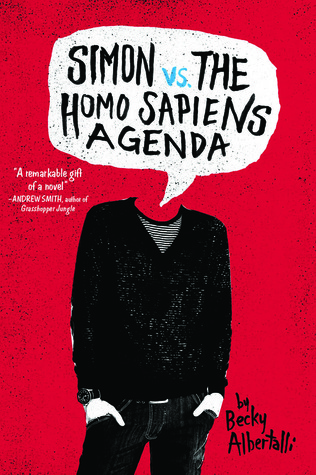
Review || Simon vs. the Homo Sapiens Agenda

After millions of people told me to read Simon vs. the Homo Sapiens Agenda, I have finally read it and can now join the masses in insisting that you should read it, too!

The wait list at my library for an ebook of Simon is many months too long. But while vacationing and checking out the new-to-me Vista Grande library in my hometown of Casa Grande, Arizona, I spied Simon there, clean and new and untouched, waiting for me to read it. Which I did in less than 24 hours. I fangirled to the poor circulation desk librarian about how these days all I read are ebooks and I really miss reading on paper and how the stack of books I grabbed have an endless wait list and are OMG popular. He seemed a bit surprised and not in on the world of YA fandom.

When I was younger in Casa Grande, I volunteered at the library, and my ‘boss’ was the children’s and youth librarian (who I now realize was a liberal gal who took a job in a small, conservative agricultural community). I really am grateful for the things she taught me and the experiences I had because of her. I think that if I got my master’s, it would be in library science with the goal of doing youth programming. Anyways, it’s symbolic to me that I was reading this book while being back in my home town, with my younger sister reading over my shoulder.

Simon is a teenage boy who is busy dealing with the drama of typical high school days and navigating just how exactly he should come out.

Not only is the plot well designed, but because author Becky Albertalli is a practicing child psychologist, the characters feel incredibly realistic and authentic. It didn’t read at all like an adult trying to use teenage jargon—it came across as a teenager using teenisms (which may make the book have a shorter shelf-life than normal, but it’s perfect for the moment).

Again, the author is a genius. She deliberately links emotions and physical actions to show that what someone is doing on the outside is a result of something going on on the inside, and those inside things are totally, completely normal. For example, at one point in the story, Simon is upset and having a conversation at the same time. After a moment, he realizes that he is yelling and he feels embarrassed about having a hard time controlling his voice level. It’s these types of details that separate believable YA from adults-writing-to-kids YA.

Simon’s fears and concerns are just so relatable. He talks about wanting to keep even small things as a secret from his family (really small: he started drinking coffee), because they turn everything into a big deal. I still do that! And in a completely non-preachy scene near the end of the book, Simon’s mom explains that as a parent, every new development is an amazing and exciting change, no matter how small. Like new moms posting with way too much TMI on Facebook, moms of teenagers are just as excited.

I wish I had read this book when I was younger, for the sake of realizing how normal my family and feelings really are. While I was reading it, I imagined myself as a youth librarian, recommending this book to someone and it changing their world so that they would remember it years later, even if they never talked to anyone else about it.

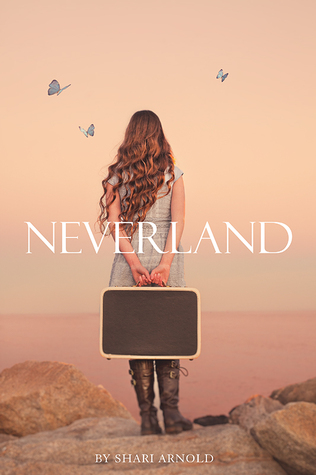
Self-Published Spotlight || Neverland by Shari Arnold

Besides being the cover-whore that I am, I love the tease of a retelling. Neverland, by Shari Arnold, was just too much bait rolled into one package for me to resist. At the same time, it’s a self-published book, and I’m still in the middle of confronting my prejudices about those.

Neverland was able to meet me where I was at, and far exceeded my expectations. The editing was spot on, the structure was well-developed, and the idea was interesting—a contemporary Peter Pan told from Wendy’s point of view.

Wendy in this book is named Livy, and she is in the midst of grieving over her younger sister who had lost the fight against cancer. Everyone in her family is still grieving, actually, and they are expressing it in different ways. Her father is socially unresponsive, and her mother is busy trying to pretend that everything is fine by throwing herself even further into her career. I was impressed by how they show different sides to their grief, and how its complexity was revealed even in the mechanics of the storytelling.

It was fun to hunt for familiar characters—Peter Pan, Captain Hook—but even more fun to realize that their story isn’t as black and white as I remembered from childhood. For example, in this story Captain Hook is a quasi Grim Reaper character, but is passing from this life to an unknown (and potentially better) life such a terrible thing?

Perhaps one of the best things this book speaks to is romantic relationships. Okay, yeah, sometimes the teenage girls sound more like moms of teenage girls (‘Stalkers are only sexy in the movies.’), but I think it’s nice that they are able to set some real ground-rules for what a normal dating relationship should be (especially with all the examples of harmful dating relationships that teenagers/new adults are eating up these days). The characters aren’t there to preach, however. They do make bad decisions, and express real, authentic insecurities. I think the self-doubts were the most therapeutic parts of the book, because when you read them you realize that you are not alone with those doubts. And by seeing you are not alone, you can begin to see doubts for what they really are: just a story we tell ourselves.

Note: I got an e-copy of this book in exchange for an honest review. That of course didn't affect my opinion of the book.

If I Were the Editor of ‘Cleo’


Sometimes I am punished by karma for judging books by their covers. Though I was truly looking forward to reliving my childhood fixation on Ancient Egypt, I mostly requested an ARC of Cleo because the cover was so puurrrty. Note to self: Stop doing this.

Cleo is about a young Cleopatra whose mother has just died and whose father is playing politics in Greece. Her two half sisters take over the dual-throne of Egypt and so doing threaten the blessing of future of the country because they worship Am-Heh, the god of evil. Cleo, as the goddess Isis’s chosen one, must complete a quest and help Isis regain her full power.

There were so many things I disliked about this book, but I think most of the problems could be solved by going through a heavy round of editing. If I were the editor, here’s what I would tell Lucy Coats to do:

Cut out redundant information. For example, whenever something not all sparkles and sunshine is happening (in a landscape description, with an action scene, with vegetables) there is a sentence explaining that Isis is loosing power and that’s why life isn’t unicorn farts. After the second mention, I will be able to make the connection without the author holding my hand.

Cut down on the constant inner monologue. The book is written in the first-person perspective, and Cleo has lots of secret information that she can’t tell anyone, but she chatters so incessantly in her own mind that I my introverted self was getting annoyed with the author. And it wasn’t just chatter, it was repetitive questions that Cleo never asks aloud and the audience is not supposed to answer. Let me give you an example from the text:

“How long did we have? I didn’t know. It must be late in the evening — but had we passed over into the day when the Dark Feast of Serapis dawned?”

Since this 320 page book is about 20% questions, a rewrite without the questions makes this much more palatable. Here’s my suggestion:

It was late in the evening now, and I wasn’t sure how much time we had before the dawn of the Dark Feast of Serapis arrived.

Do not make this story into two parts. The book ends with “To be continued…” when there is absolutely no need. Additionally, it’s broken at a really awkward place: right after the group has successfully escaped the city with the important things they need and are on their way to deliver the important things to Isis. Fifty more pages and this story is over! Sure, more plot points can be introduced, but that’s just prolonging the inevitable. If you must, make book two about Cleo on the throne and finish book one’s adventure where it started. Yeah, there’s the issue of this book becoming a 500 page tome, but if Cleo’s questions got cut out and the repetitive information was condensed into more dignified sentences, this book would still be under 300 pages.

Cleo hits shelves May 7, so unfortunately my edits won’t be taken into account ;) I’m willing to be hired on future projects though!

Note: Orchard Books gave me an e-ARC for review purposes but that obviously didn't change my honest opinion.

'The Walls Around Us' Brings Life to Ghosts of the Past


Perhaps you know Shirley Jackson for her short story ‘The Lottery’ that you read in an American literature class. She published tens of short stories and several novellas, centering on themes of isolation, ‘otherness’, and a perverted sense of justice. Everytime I read one of her stories, I talk about them as creepy, eerie, disturbing, mind-bending, unexpected, yet familiar. They are familiar because she has so influenced our current generation of authors (Stephen King, Neil Gaiman, Suzanne Collins, etc) that we surely know her tales just by rubbing shoulders with more contemporary works.

As I read The Walls Around Us by Nova Ren Suma, I kept thinking about We Have Always Lived in the Castle, published a few years before Jackson’s death in 1965. The two stories are so similar that if I described key elements in Jackson’s story, it would reveal important plot points in The Walls Around Us. Both tackle Jackson’s favorite themes that I mentioned earlier, and even some finer details make a dual appearance.

That’s not to say that the stories are identical, however. The Walls Around Us has two narrators: Amber, an inmate in a maximum security juvenile detention center in upstate New York, and Violet, a rich ballet dancer on the cusp of a successful career at Juilliard. They narrate their lives and experiences, but they both have a curious obsession with Ori. Ori, who is a former ballet dancer and Violet’s best friend, is convicted of murder and becomes Amber’s cellmate.

As the story progresses, you realize that Amber’s words, “I knew that just because people on the outside were free and clean, it didn’t mean they were the good ones,” ring true. Both Amber and Violet are telling Ori’s story, but they are deliberately not telling all of it. As you piece together different angles, versions of events, and correct the timeline that is given, you see that something very dark and disturbing emerges.

The narrative style itself is very beautifully written. Though I usually dislike first-person narration, it made sense to use it in this book because it highlights the differences in the ways each character tells her version of the story. Besides that, the prose and rhythm of the sentences are gorgeous, and I appreciated that the paragraphs were built in a way that wasn’t always linear and straightforward.

I enjoyed reading The Walls Around Us because the story is intriguing, it’s well-edited, and the storytelling itself is of such a high caliber that I would point to this as an example of what to aim for in a YA novel.

On a side note, after reading The Walls Around Us, I was inspired to read all of Shirley Jackson’s stories this year. Anyone with me??


Thank you Algonquin Young Readers for providing an e-ARC for me to review! That didn’t affect my opinion of the book in any way.

3 Reasons to Read 'A Darker Shade of Magic'


Since I read tons of book blogs specifically about YA fiction, it’s pretty normal for me to see more than five book reviews of the same newly released book in one week. Because I like seeing how different people write reviews, I go ahead and read them all. What I end up finding is that one review tips the scales and convinces me to add that book to my TBR, not because it is such a beautifully-written review, or even because it was a positive review. It’s usually because of one sentence that mentions something that I’m interested in.

I know that recently tons of reviews of A Darker Shade of Magic have been being posted. It’s a fun, well-paced book about magical young man who can travel between different versions of London and starts on a quest to “throw the ring into the fires of Mount Doom” (so to speak). But, maybe you haven’t added it to your TBR list yet. Here are three reasons that might tip the scales:

There is no romance.
Sometimes I’m in the mood for a good, clean, fun romance (I’m headed straight to you, Rainbow Rowell). But most of the time I would much rather skip the does-he-like-me drama, unconvincing love at first sight (let’s be real and call it hormones or lust), or the brave yet undecided girl-caught-in-a-love-triangle. I think it’s too shallow and narrow-minded to assume that all teens, or all readers have relationship issues and can/want to relate to characters that do. I didn’t and I don’t. I want to read books about friendships with excellent interpersonal character development. A Darker Shade of Magic portrays good light-hearted friendship, cooperation, and playful banter between the main female and male characters.

It’s definitely fantasy, but you don’t have to be a super-nerd to enjoy it.
The Chronicles of Narnia has a wide audience appeal because the fantastical elements don’t require a lot of effort from the reader to grasp, the pacing remains steady, and the invented world doesn’t differ much in appearance from our own. Compare TCON with Lord of the Rings--which fantasy style asks more of the reader? ADSOM uses fantasy and magic in ways very similar to The Chronicles of Narnia and Harry Potter.

It has a great female character.
She’s spunky, pushy, determined, tries to be self-reliant, and keeps a positive attitude. She has big goals that she’s working towards (though I wouldn’t say her goals and line of work are exactly something you should aspire to follow). She’s clever and quick-witted. And she has some obvious flaws. Sometimes she appears more like a cartoon character than a real-live person we might encounter in the world, but the key thing here is that she’s not simply a vessel (skip to ‘Exhibit A’).

Did I convince you yet? If you’ve read ADSOM already, can you think of more reasons to convince potential readers?

‘Belzhar’ Strikes a Good Note


There are no spoilers in this review, I pinkie swear.

Jam Gallahue is in love, in that bubblegum hormone-fueled hurts-so-good way. She’s in love with a smooth, hot British exchange student, and she knows that this is the real deal.

“Our entire relationship consisted of smiling, smirking, and saying funny things to each other. But I wanted our shoulder to touch. It was as if I thought our shoulders could almost communicate.”

You remember that feeling, right?

So she’s in this relationship where they don’t really have much to say to each other, they just have a mutual understanding of their avowed until death-do-us-part love. Oh and btw, they discovered this love 16 days after they met for the first time.

Fast forward a bit: the boyfriend dies after 25 days of dating (this is not a spoiler), and Jam enters such a state of grief that after one year she still hasn’t emerged. If you are thinking that her grieving seems...like she has deeper issues to deal with… you wouldn’t be alone in that. Her parents send her to a special boarding school for teens that need non-medicated psychological support.

At the school, Jam is placed in an exclusive, invite-only “special topics” English class with an intimate handful of other students. They study Sylvia Plath (hence the wordplay between The Bell Jar and Belzhar) the entire semester, and like Plath, must make regular journal entries throughout. These journals come with a special ability to help the students process their grief and pain in a very unique way.

Throughout the book, I was interested in the story, but had to keep taking two-second reading breaks to roll my eyes. I really dislike romances where the characters don’t show me how they have a long-term sustainable relationship based on something other than, “I just knew it,” or “We had a special connection.” I couldn’t get past how Jam was so in love with a guy that she knew for approximately a month, and whom we as the reader know nothing about besides she thinks he’s hot.

I’m glad I kept reading, however (full disclosure: until 3am). The author, Meg Wolitzer, is not a bad writer of romances, and everything made sense in such a clear way in the end. It’s one of those endings that makes you think back and remember all the clues and hints that were dropped along the way. Like, “Duh, dumb Alisa, why didn’t you pay more attention!?”

As the book progresses, Jam begins another relationship with a guy at the boarding school. She struggles with feeling like she is cheating on the dead British bloke, but Wolitzer makes an elegant contrast between the ways the two different guys treat Jam. It’s not in-your-face and preachy, like some authors that are new to the YA club tend to be. The ongoing comparisons are quiet and demure, yet I think that it could help out a reader who is wondering if their current relationship is healthy or not.

Despite my review’s focus on the romances in the story, the Belzhar’s overall message isn’t about dating. All of the characters are trying to stay living in the past, and are missing out on the present as a consequence. The story is built to illustrate the problems of being too self-abrading with mistakes (hellooo, perfectionist self!), and left me with a powerful punch of one of my favorite self-affirmations: You cannot go back. You can only go forward.

Looking for Romance and Finding Friendship in Will Grayson, Will Grayson

Will Grayson, Will Grayson cover


*Contains very minor spoilers! Ye have been warned!!*

Will Grayson, Will Grayson was my first exposure to both John Green and David Levithan, the ever-so-trendy YA authors. It’s like a crime that I call myself an avid YA lit consumer, and haven’t read The Fault in Our Stars or Boy Meets Boy. This was also my first time reading a book with LGBTQ prominent characters. Dumbledore doesn’t count, you guys.

At first, I was a bit averse to picking this book up on account of its being stuck in the GAY & LESBIAN genre. There are multiple sides to the genre debate, I know because my boyfriend and I argue about genre labels all the time. On the one hand, It makes it easier to find books with topics you are interested in, but on the other, it’s also possible that the label will turn you off from reading a book that you would actually enjoy because you didn’t like the last book you read in that genre. I just always assumed that a book filed under “Gay & Lesbian” as one of its defining characteristics wouldn’t interest me. I mean, even if I read a book with straight characters who are thinking of / talking about / taking action on sexual thoughts all the time, I’m not too interested. I usually breeze through those parts and judge the author. So I always thought, “Well, the only way this book would have enough content to be in this category is if the characters are all lusty all the time.”

Will Grayson, Will Grayson isn’t like that. It does have a couple gay characters: one of them is stereotypical (likes musicals, says words like “FABulous”, makes it clear who is hot and who is not) but the other is not. The other, Will Grayson, is an average lower-middle class teenager growing up in suburban America, struggles in a single-parent home, takes medications for depression and anxiety, is unaware of how arrogant and self-absorbed he is, and gets butterflies in his stomach about holding hands with his crush. He is a remarkably realistic, believable character, and more importantly to me, was not what I imagined when I read the label that he came with.

The book is set up so that the chapters alternate between two characters. In the first hunk of the book, the times remain consistent, so when one chapter ends at say, 3pm on Tuesday, the next chapter will start at 3pm on Tuesday. One uses proper formatting, the other uses all lowercase (because I was reading an e-ARC, I assumed the final edits weren’t done yet...true story). Besides this, you don’t get a lot of clues that you are reading about different people until about 25% of the way through the book.

Now, I assume you are a much more clever person than I, because it took me an embarrassingly long time to figure out that, guys, there are TWO WILL GRAYSONS in the book. They are completely separate characters who happen to have the same name. There is no magical explanation of alternate realities or changing space time or reincarnation. It does not get awkward super weird Freudian theory puzzling and they don’t fall in love with each other. Read in peace. Because I certainly didn’t.

Straight Will has basically everything in life going for him: chill parents with well-paying jobs, good looks, good connections, and a super cool standoffish attitude that doesn’t allow him to get sucked into school drama. Gay Will, as I mentioned, is a little more believable. Both Wills struggle with expressing their emotions and have trouble when it comes to commitment in romantic relationships. But ultimately, the story isn’t about romance. It’s about friendship.

Will Grayson and Will Grayson have a mutual friend named Tiny. Tiny has a big build, a big personality, a big presence, and is pretty mature for his age. He is always going out of his way to build confidence in other people, and he looks outside of himself to push and encourage those around him to reach further. Though Tiny plays a supporting role in this book, he actually is the one that ties the whole story together. In the end, the two Wills emerge from their self-absorbed bubbles and work together to show Tiny how much he is appreciated.

This book was an enjoyable read, it surprised me in really good ways, and it has a refreshing emphasis on healthy friendships (not psycho lust interests like so many other YA books that SHALL NOT BE NAMED). It definitely broadened my horizons and showed me some of my own biases. Read it, it’ll be good for you!

I got an e-ARC for review purposes, but that in no way affected my honest opinion.

Cecilia Gray Sketches a Good Character in ‘Drawn’

Drawn by Cecilia Gray


The saying, “Don’t judge a book by it’s cover,” must have been first said by a book reviewer. Since I’ve started to review advanced copies of books, I’ve been surprised more often than not that the story I thought I was going to read is quite a bit different than the story actually is. I’m still in the process of learning that lesson, though. ;)

The official description of Drawn is this:
Take a journey into the gritty world of political espionage through the eyes – and lies – of one extraordinary girl. A wholly original tale of friendship and betrayal.

Sasha has a secret – that she can make you spill your secret with nothing more than a question. Her strange gift makes her a burden to her foster family and a total freak of nature. Not that Sasha cares. Why should she when no one cares about her?

Then the CIA knocks on her door. They want to give Sasha a new identity and drop her into a foreign country to infiltrate a ring of zealous graffiti terrorists. They want to give Sasha something to care about.

To survive a world where no one is who they seem, Sasha needs to make people trust her. But when that trust blossoms into love, Sasha is forced to decide between duty and friendship, between her mind and her heart, and whether to tell the truth or keep her secrets.

I wouldn't have guessed that based on this cover! It is about friendship, lies and partial truths, the CIA, a Banksy-type character named Kid Aert, and a girl with a mutant ability to make people tell the truth if they hear her voice. Drawn is about all of this.

But to summarize it as only those things misses the mark. The authoress, Cecilia Gray, dug much deeper to address what is in the psyche of a person who has been abandoned by parental figures multiple times at such critical points in life--when her brain is forming relational patterns--and how that affects her relationships with everyone.

Sasha constantly blames others for giving up on her. Her voice is difficult to be around because it makes people say exactly what is on their mind (and those are generally less than flattering things), so people naturally gravitate away from her. Rather than risking being rejected again, she pushes potential friends away.

Though her voice is bad for keeping relationships, it is useful for obtaining information for the CIA. Sasha has been working for the government since her gift was discovered as a young child. She has worked as a tool of the government her whole life, and her relationship with adults is based solely on her value as a tool. She places her entire worth as a human in her ability to do her job for the government. Because she feels used, she justifies using others. And she manipulates her friends into helping her accomplish her job.

Sasha is a pretty well-developed character and has legitimate inner-conflicts. The author did a great job thinking through the effects that treating people as less than human will have. She shows a lot of patterns that a girl who has been trafficked, abused, or abandoned would have. Plot-wise, however, it was a little too farfetched for me. No matter what fictional world is created, all worlds have to abide by the law of Allowed Amount of Coincidences. I wouldn’t recommend this book because it breaks the law.

Note: I received a free e-copy of this for review, but that didn't affect my honest opinion here.

Dating Advice from Hush

Super-short synopsis of Hush by Stacey R. Campbell: The Princess Diaries + more romance between hot co-eds.

At first pass, I was irritated with some large leaps in logic that I was asked to take. Example: one character finds the Prime Minister’s phone number after a quick search online. As in, Oh gimme a minute and I’ll google David Cameron’s phone number. This sort of thing happened frequently. But then I realized that this story would be perfect as a Disney Channel Feature Film starring the latest Blondie McStarlet — you know, the kind where the unfeasibility of the story is passed over like last year’s homecoming dress in favor of the idea of a hot British guy falling in love with a laid-back all-American girl-next-door.

I am a logical person. Even fantasy books still need to follow the properties of physics. But say I laid that aside, there was still an important problem that bothered me.

Even though the main character Blakely has a lot of positive qualities, she can’t help that she was written in such a way that she passes on bad advice from the author when it comes to romantic relationships.

1. The cure for a broken heart is to get in a new romantic relationship.

“She needed to get over Stewart. The only way he could see Blakely accomplishing that was for her to get together with someone else, and Max was the perfect candidate for the job.”

I understand that sometimes you need to tell your friend: “Look, you are dwelling too much on the past. Let’s find a way to get your mind off it.” But the way to recover from a hole in your heart is not by filling it with another person. It’s by becoming a WHOLE person. Maybe this means finding a new hobby, setting a goal of some kind, learning a skill, journaling, or understanding more about yourself through personality discovery tools.

2. Ignoring someone will make them want you more.

“...the more he tried to charm her, the more she ignored him. She was driving him mad.”

I think this idea feeds into rape culture. Whenever I see this scenario in movies, it makes me so angry that I usually stop watching. The girl says “No”, the guy says, “She doesn’t mean it,” in the end the girl says “Yes” and the guy says “I knew she didn’t mean what she said. She didn’t know what was good for her.” I don’t just mean about sex. It could be about eating two cookies instead of one. There is a difference between saying “I changed my mind” and caving in to the nagging of someone else. Can I get a book with some examples of relational maturity and respect, please?

3. Making your crush jealous will speed up your relationship status.

“Was that jealousy he saw in her delicious chocolate eyes? Oh, this was rich. … If Blakely felt threatened by Marley, maybe she would finally act on her feelings for him.”

Love/friendship does not try to make the other person feel bad. Love/friendship does not manipulate. Love is honest. Love is patient.

4. Saying that you belong together is pretty much proof that you do belong together.

“The way they laughed, the ease in the way they talked, it was like they belonged together.”

The characters think a lot about how perfect they are together, how perfect their friends are together, etc etc. But as a reader, we don’t actually see them working well together. And we don’t see them having a real conversation about their thoughts, speculations, likes and dislikes… things that people who are dating usually try to find out. Instead, they flirtatiously put each other down, make sexually suggestive comments to each other, and sometimes they talk about homework assignments. Yup, that’s gonna last in the long run.

Note: I got a free copy of this for review, but that didn't change my honest opinion of the book.

Fate, Futility, and The Witch of Salt and Storm

There are two things that I dislike. If you are an author, and you put these in your story, you will have to work very hard to convince me to forgive you for such sins. The two things are:
1. first person narration
2. dream sequences.

The Witch of Salt and Storm is narrated by a girl who can interpret dreams.

Seven Books for People Who Like the Color Yellow

Organizing a bookshelf according to color makes perfect sense to me — I am more likely to remember a book by its cover than its title or author. I went to a bookstore and did some color arranging of my own the other day. Though I wasn't interested in reading any of these books, I did have fun on this scavenger hunt through the YA section.


OMG! I'm in Love With a Geek! by Rae Earl
Tape by Steven Camden
Exile by Kevin Emerson
Innocent by Anne Cassidy
Burned by P.C. & Kristin Cast
Struck by Lightning: The Carson Phillips Journal by Chris Colfer

I found this book on my way out:


When Mr. Dog Bites by Brian Conaghan


What color should I hunt for next?

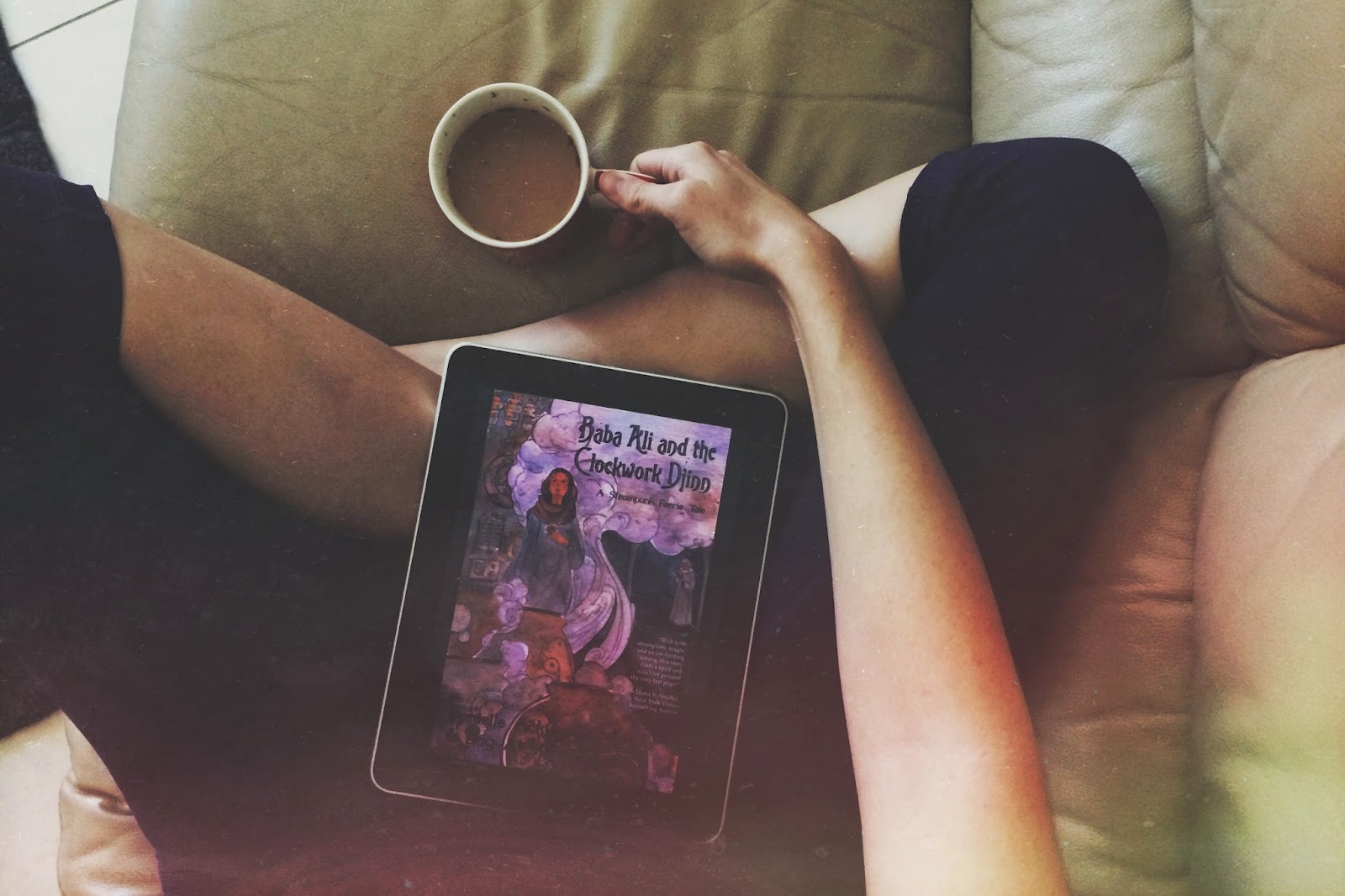
An Arabian Nights Remix: Baba Ali and the Clockwork Djinn

If you were to guess that this book is a retooled tale of Ali Baba and the Forty Thieves, you would be correct. Like any good fairy tale, it is not incredibly original. We seek out fairy tales because of their familiarity. Consider why most western fairy tales have events in sets of three (e.g. Goldilocks and the Three Bears, the Twelve Dancing Princesses and the three night challenge…) – to let us get comfortable but not too comfortable, to add suspense as we search for the change in the pattern, to give us a skeleton for retelling and embellishing the tale for the next generation.

Baba Ali and the Clockwork Djinn

The authors, Danielle Ackley-McPhail and Day Al-Mohamed, rely heavily on the structure of a couple of the more famous Arabian folk tales: there are forty thieves, a vast treasure that once belonged to the caliphate, an enchanted cavern that reveals itself to the words “open sesame”, and a djinni (anglicised: genie) that is trapped in a bottle and a ring, among other elements that readers familiar with the traditional tales will recognize. But they go beyond the familiar to weave a tapestry infused with strands of Arabic, Persian, and Egyptian culture and vocabulary, create scenes that transport the readers to the early twentieth century Arabia (if it had magic and steampunk additions), and teach us about the nature of the Islamic faith through the patient piety of Baba Ali.

Ali is a 18-year-old Arab boy, doing an engineering apprenticeship in England. The book begins by following him as he seeks to complete a simple errand, but shows his exhaustion as he is discriminated against and antagonized by the homogenous, unwelcoming streets of London.

Self-Published Spotlight: Alora by Tamie Dearen

I have a prejudice. I will watch cell phone videos of a person in a dirty bedroom playing a guitar with interest. I supported Radiohead when they released In Rainbows sans record label. I love the forefathers of contemporary art because they thumbed their noses at the institutionalized rules. Recently, Youtube serial dramas have filled the void in my life created when I stopped watching TV seven years ago.

But books? No. There are just too many reckless users of the English language out there and I am not going to bother wasting my time unless it has the official stamp of approval. And a professional editing job.

After reading an article about how the book industry is the last snobbish holdout against the internet-fueled creative revolution, I decided to confront my prejudice. How could I say I disapproved of self-published books if I had never read one?

Sisters: the small stuff may annoy you, but they do have benefits

Here’s the gist: Little Miss Sunshine style road trip complete with the rickety VW bus, parents on the verge of a divorce, and family members that are too wrapped up in their own worlds to see the problems of the others. You can guess how it resolves.