2015 Year in Review

So, it’s been awhile since my last post. Here’s what I’ve been up to:

Running. A lot more. I bought a gym membership because running is just plain hard to do on a regular basis if you don’t have a car in São Paulo. A gym has given me access to physical safety, controlled temperature, weights, and convenience. So worth it for my overall mental health and well-being. I plan to run a half marathon in 2016.

Proofreading. I’m taking a course, practicing, and studying. I want to transition some of my teaching hours into proofreading hours.

Studying Portuguese. No news here, I still suck at it.

Reading. I have been reading! But mostly books that I didn’t feel like writing book reviews for—either they were nonfiction, or audio (it’s harder for me to write reviews of audiobooks because I have a poor memory), or classics which don’t need another introduction.

Now that I feel like I sufficiently excused myself from blogging regularly, I'll progress on to the purpose of this particular post—doing a bookish recap of 2015!


My goal is always to read 52 books in a year, but I never make it. I don’t beat myself up over not reaching my goal, but I know that if I didn’t set any goal I would read half as much as I could. In 2015 I read 48 books. Many of these were graphic novels. Many of these were tomes. I am satisfied with how much I read.

I had another goal this year, which was to get over my prejudice towards self-published books. Honestly, I still have a prejudice when I think about buying self pubs, but this year I was so delightfully surprised by the level of quality in the books that I did read. Seriously impressed.

And finally, do you remember that I was casually doing the Pop Sugar Reading Challenge? Neither did I. But I got most of the categories without intentionally trying.

I changed the focus of my blog a lot in the past year. I was experimenting with different things, entertaining myself, and well, it’s my blog and I can do what I want. I did a lot of stuff with the book-blogging community in the first half of the year, grabbed a lot of advanced review copies from Netgalley, and honestly had fun. I got burnt out on that and decided to use my blog as a way to improve my own writing about books—insightful critiques, drawing parallels to other books or things out and about in the world, honing in on one specific problem I had with a book and trying to correct it. The latter sort of post naturally comes less frequently than the former.

As I’m writing this post and scrolling back through my blog, I’m proud that I kept this record this year. I’m so happy that I included book photos that I took myself (I’m going to continue doing that, and not be so lazy with it in the future). I am glad that I wrote all different types of posts. This blog is certainly more flavorful than my Goodreads list alone, and a year of book blogging has encouraged me to keep with it in 2016.

Blessed new year, friends!

  1. Piteco: Ingá by Shiko
  2. Landline by Rainbow Rowell 
  3. Mansfield Park by Jane Austen
  4. City of Lies by Ramita Namai
  5. And Then There Were None by Agatha Christie
  6. The War of the Worlds by H.G. Wells
  7. The Shadow Over Innsmouth by H.P. Lovecraft
  8. Astronauta: Singularidade by Danilo Beyruth
  9. Bidu: Caminhos by Eduardo Damesceno
  10. Orhan's Inheritance by Aline Ohanesian
  11. Will Grayson, Will Grayson by John Greene and David Leviathon
  12. A Tale for the Time Being by Ruth Ozeki
  13. Colorless Tsukuru Tazaki and His Years of Pilgrimage by Haruki Murakami 
  14. A Bride's Story, Vol 1 by Kaoru Mori
  15. Belzhar by Meg Wolitzer
  16. The Calling by James Frey
  17. A Darker Shade of Magic by V.E. Schwab
  18. Akira (complete series of 6 volumes) by Otomo Katsuhiro 
  19. The Walls Around Us by Nova Ren Suma
  20. Cleo by Lucy Coats 
  21. The Fountainhead by Ayn Rand
  22. Measure for Measure by William Shakespeare
  23. Salad Anniversary by Machi Tawara
  24. Wayward, Vol 1 by Jim Stub
  25. Low, Vol 1 by Rick Remender
  26. Fragile Bones by Lorna Schultz Nicholson
  27. Anna Karenina by Leo Tolstoy 
  28. The Fellowship of the Ring by J.R.R. Tolkien
  29. Neverland by Shari Arnold
  30. Penadinho: Vida by Paulo Crumbim
  31. The Haunting of Hill House by Shirley Jackson
  32. Welcome to My Country by Lauren Slater
  33. Fahrenheit 451 by Ray Bradbury 
  34. Stiff: The Curious Lives of Human Cadavers by Mary Roach
  35. The Books of Magic by Neil Gaiman
  36. So Long, Insecurity by Beth Moore
  37. The Goldfinch by Donna Tartt
  38. What's So Amazing About Grace? by Philip Yancey
  39. Fangirl by Rainbow Rowell
  40. The Heart Goes Last by Margaret Atwood
  41. A Call to Conscience: The Landmark Speeches by Martin Luther King Jr.
  42. The Picture of Dorian Gray by Oscar Wilde
  43. Pride and Prejudice by Jane Austen 


    *Bold means the book impacted me in a significant way.

    Grace and 'The Goldfinch'

    I am two years late to The Goldfinch’s party, but I am not so insecure as to let that bother me. Donna Tartt’s tome still takes up a good amount of real estate in bookstores and libraries, and for good reason—the novel really is what many critics call a modern-day Dickensian tale.

    A photo posted by Polly Fern © (@pollyfern) on


    In short, the protagonist Theo Decker gives an account of how he came into possession of The Goldfinch, a small painting by Dutch Golden Age artist Carel Fabritius, and how that possession turned into a lifelong obsession which drove him to extraordinary adventures and contemplations of the role of fate. It’s basically Great Expectations with drugs, PTSD, and fine art.

    A photo posted by Polly Fern © (@pollyfern) on


    Although I did enjoy the story despite it having many passages filled with my pet-peeves— descriptions of dreams, drug-induced hallucinations, and drunken misadventures—the character development is what made this story great.

    I fell in love with all of the characters to the point where I could overlook their flaws (their human flaws, not flaws in the writing), even in Theo’s closest pal Boris, who always shows up with bad decisions in his pockets. The characters are so well thought out that they effortlessly carry themselves through the nearly 800 pages. They lean a little towards the romanticized, this is being told through Leo’s foggy worldview remember, but never to the point that I stopped believing they could be real people.

    A photo posted by Polly Fern © (@pollyfern) on


    When reading a book review, I often think “blah blah okay character development is nice” and don’t give it the importance that I should. I should know myself better: I don’t like plot-driven stories, and I detest when it is obvious that the author doesn’t actually know how real people in the real world act. Give me characters or give me a blank notebook, I’ll write my own story thankyouverymuch. The reason why I am able to read and enjoy stories from so many different genres is testimony to this. Characters, no matter how different their personality is from my own, give me an idea as to how I would react in their situation and how to show grace to real people like them.

    A photo posted by Polly Fern © (@pollyfern) on


    The Goldfinch is not a perfect book. It shows human depravity, and what’s worse, at the end it preaches that perhaps sinning isn’t really anyone’s fault and we should just focus on the good things that happen.
    So, why not stop then? I said.

    Why should I?

    Do I really have to say why?

    Yeah, but what if I don’t feel like it?

    If you can stop, why wouldn’t you?

    Live by the sword, die by the sword, said Boris briskly, hitting the button on his very professional-looking medical tourniquet with his chin as he was pushing up his sleeve.

    And as terrible as this is, I get it. We can’t choose what we want and don’t want and that’s the hard lonely truth. Sometimes we want what we want even if we know it’s going to kill us. We can’t escape who we are.
    I get the feeling that The Goldfinch embodies the mainstream beliefs in our culture now (it did get the Pulitzer, after all), and that Theo is a representation of us Millennials. That our duty in life is to drift along, to try to make good decisions but shouldn’t be blamed if we end up making bad ones, and if two wrongs make a right…. then so be it. I completely disagree with this premise. So does the ancient wisdom written by Saint Paul:
    All that passing laws against sin did was produce more lawbreakers. But sin didn’t, and doesn’t, have a chance in competition with the aggressive forgiveness we call grace. When it’s sin versus grace, grace wins hands down. All sin can do is threaten us with death, and that’s the end of it.

    Grace, because God is putting everything together again through the Messiah, invites us into life—a life that goes on and on and on, world without end. So what do we do? Keep on sinning so God can keep on forgiving? I should hope not!

    As long as you did what you felt like doing, ignoring God, you didn’t have to bother with right thinking or right living, or right anything for that matter. But do you call that a free life? What did you get out of it? Nothing you’re proud of now. Where did it get you? A dead end. (Romans 6, The Message)  
    We are not slaves to fate. We do not have to do something bad to force karma to tip the balance of the scales in the world and create something good. On the contrary, I think we have to work all the harder to not only correct wrongs, but prevent them in the first place. And when our humanity fails us, which it will, we have grace to catch our fall.

    Even though I think the message of the book is decidedly false, I would absolutely recommend this book. For,
    It is the mark of an educated mind to be able to entertain a thought without accepting it.
    - Aristotle

    A photo posted by Polly Fern © (@pollyfern) on


    'Welcome to My Country' puts us in touch with mental health struggles

    Recently I have been on a pop-psychology binge, fueled by my plunge into several amazing podcasts. This led me to download or request all of the remotely interesting e-books that my library has on the subject... and my three-day holiday weekend just got completely full.

    I started with Welcome to My Country by Lauren Slater, a thin memoir about the author’s experiences of working with six memorable mental health patients. The language is poetic and introspective—fans of Ann Voskamp will revel in this—as Slater intertwines memories of her own mental health struggles, the collective human spirit, and primordial physical processes with those of the patient to help the reader understand that really, the problems of “the other” are all of our problems.

    Published in 1996, it’s now a teensy bit dated in the fast moving world of what is and is not politically correct to say. The first chapter is particularly hard to swallow with phrases like, ‘I can tell, from his fatness and his sweat, [that he is] a patient.’ Uh, what? Perhaps Slater’s Harvard education trained her olfactory nerve to be sensitive in a way that us plebeians just aren’t able to understand.

    Her writing did get significantly better each chapter, as she reflects on former patients with the following conditions:
    • a group of men with schizophrenia
    • Peter, with anxiety that manifests as abusive misogynism
    • Joseph, with schizophrenia and hypergraphia (compulsive writing)
    • Marie, with depression and bulimia
    • Oscar, with schizophrenia and catatonia (becoming physically ‘frozen’)
    • Linda, with borderline personality disorder (though that chapter is more about Slater confronting her own past)

    The book stays very positive in light of the heaviness of the subject, yet it still manages to give proper gravity to very serious stories. It doesn’t give a false sense of hope or flippancy to the daily struggles of the millions of people struggling with some type of mental illness. I think the author showed that making progress towards healthy, sustainable independence takes a lot of work, a lot of patience, and a lot of time. She encourages us to be more patient with people in our own lives (or perhaps even with ourselves!) who are on that journey.

    Perhaps the best thing that I walked away with was this quote about the author's own journey towards healing:
    ‘Ultimately, it was not the treatments or their theories that helped me get better, but the kindness lodged in a difficult world.’
    I may not ever be able to get proper training in therapy or psychology, and I’m probably not a great person for that job anyways, but we laypeople have an important job to do. We are the listening ears, the helping hands, the kind mouths, and the faith-full hearts that can give reassurance and hope to people who are fighting to stay in the country of the whole.

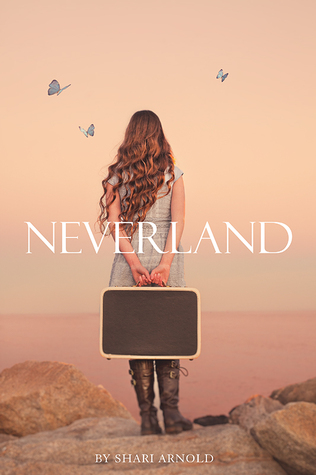
    Self-Published Spotlight || Neverland by Shari Arnold

    Besides being the cover-whore that I am, I love the tease of a retelling. Neverland, by Shari Arnold, was just too much bait rolled into one package for me to resist. At the same time, it’s a self-published book, and I’m still in the middle of confronting my prejudices about those.

    Neverland was able to meet me where I was at, and far exceeded my expectations. The editing was spot on, the structure was well-developed, and the idea was interesting—a contemporary Peter Pan told from Wendy’s point of view.

    Wendy in this book is named Livy, and she is in the midst of grieving over her younger sister who had lost the fight against cancer. Everyone in her family is still grieving, actually, and they are expressing it in different ways. Her father is socially unresponsive, and her mother is busy trying to pretend that everything is fine by throwing herself even further into her career. I was impressed by how they show different sides to their grief, and how its complexity was revealed even in the mechanics of the storytelling.

    It was fun to hunt for familiar characters—Peter Pan, Captain Hook—but even more fun to realize that their story isn’t as black and white as I remembered from childhood. For example, in this story Captain Hook is a quasi Grim Reaper character, but is passing from this life to an unknown (and potentially better) life such a terrible thing?

    Perhaps one of the best things this book speaks to is romantic relationships. Okay, yeah, sometimes the teenage girls sound more like moms of teenage girls (‘Stalkers are only sexy in the movies.’), but I think it’s nice that they are able to set some real ground-rules for what a normal dating relationship should be (especially with all the examples of harmful dating relationships that teenagers/new adults are eating up these days). The characters aren’t there to preach, however. They do make bad decisions, and express real, authentic insecurities. I think the self-doubts were the most therapeutic parts of the book, because when you read them you realize that you are not alone with those doubts. And by seeing you are not alone, you can begin to see doubts for what they really are: just a story we tell ourselves.

    Note: I got an e-copy of this book in exchange for an honest review. That of course didn't affect my opinion of the book.

    Guest Post || We Have Always Lived in the Castle

    Charlene from Bookish Whimsy and I decided to exchange book reviews of Shirley Jackson novels! I'm really happy that one of my go-to book bloggers was so friendly and willing to play along in spite of my flakiness (hopefully I'll be able to return to normal programming soon). I liked learning more about her tastes, even if they are a bit different than mine.  -- Alisa


    This is the first Shirley Jackson book I have ever read, and it was an interesting introduction to her kind of curious and creepy world - with characters who act a little strangely, and a view of the human race that is not at all kind. I am still not sure what I feel about this book actually. It was a gently harrowing read, with a heroine in Merricat Blackwood who I have such weirdly contradictory feelings for. On the one hand, I’m intensely sympathetic towards her, and yet at times, I find her very annoying. Although her instincts for the most part are right on, especially when it came to one character who was so unlikable, I couldn’t help but root for Merricat’s murderous thoughts about him.

    The novel is a study in strange characters. There is a mob-like, and very unpleasant group of people who live in town and look down on the Blackwoods. The author captured a vivid realism in the small town gossip and small-minded hatred of the people which was both disturbing and thought-provoking. And terribly sad. The surviving Blackwoods are each eccentric and have their own unique mannerisms and behaviors which also made them vividly realistic and interesting to get to know. While all the Blackwoods are unfortunate in different ways, I had the most sympathy with Constance, who was such a good character and yet afflicted by her past and her apprehensive nature. I really wanted something good to happen for her.

    There is a reveal in this book, that is not at all shocking because it is made pretty obvious from the start, but because of this, I found the story meandering and slow at parts - and again, much more of a study in characters and atmosphere than in plot development or suspense.. There is a pervading sense of stagnation though, in this book, that I think is part of the characters, and so perhaps it’s purposely made a part of the plot. This is short read though, with some very intense moments of dread woven into the story. I don’t think I actually enjoyed dwelling in this world Shirley Jackson created because it can be so unnerving and sad, but this was quite a vivid book.