Top Ten Most Recently Added Books on my TBR List

This week's edition of Top Ten Tuesdays (hosted by The Broke & The Bookish) is about the books that I've recently added to my TBR list. My To-Be-Read list is long (officially 317, unofficially 502), and jumps all over the place. From sci-fi to sociology, poetry to philosophy, cookbooks to picture books, contemporaries to classics. I hear about a book somewhere that seems vaguely interesting and I add it to the queue because otherwise I will never remember it again. Part of me admires my fellow bookworms who are more selective than I about which books make it to this list. But the other part of me likes trying all sorts of genres and types of books, because really, I just enjoy the experience of a good story.

The Housekeeper and the Professor by Yoko Ogawa
As I have a quiet obsession with contemporary Japanese lit and I recently finished A Tale for the Time Being, Goodreads suggested I read this book. It’s about a poor housekeeper who helps a brilliant math professor who has short-term memory loss, and what it means to live in the present. It sounds like it blends math with metaphors for life in a beautiful way.
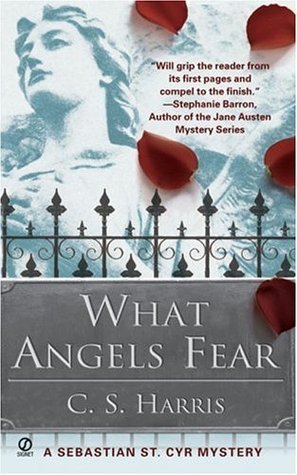
What Angels Fear (Sebastian St. Cyr #1) by C.S. Harris
Jessica at Quirky Bookworm is in love with the Sebastian St. Cyr mystery series that is set in Georgian England. I’m in love with these three words being in the same sentence: mystery, Georgian, England.
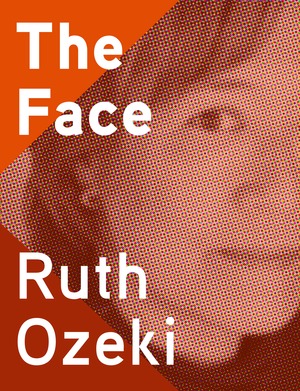
The Face by Ruth Ozeki
This is a collection of essays by various authors writing about their own faces. It’s a little more literary than things I usually read, but I’m curious about the potentials in the theme drawn from a Jorge Luis Borges quote: “A face has a social history: it tells of lineage and belonging. It exists is relation to other faces past and future. Our faces are constant but evolving companions. They are certainly not the faces we are born with, and we don't know which face we will be wearing when we die. A face accumulates signs of wear and betrays our habits of living. Above all, our faces are our most distinctive signatures; flesh-and-blood emblems of the identities we carry around invisibly.”
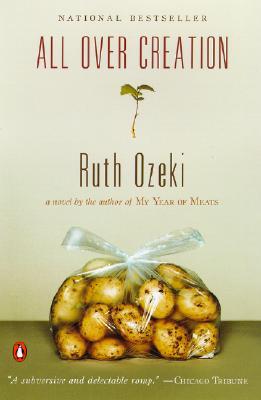
All Over Creation by Ruth Ozeki
This fictional novel about industrial agriculture giants and antagonizing protestors and community activists attracted me mostly because I’m interested in reading more books by Ruth Ozeki. Though, I do have a passionate hate for Monsanto and a distrust of large farming operations...

My Year of Meats by Ruth Ozeki
Ruth Ozeki’s first novel is set in Japan and features a mysterious link between a Japanese tv show and the American meat industry. Again, not THAT interested in the book but I’m curious about the author.
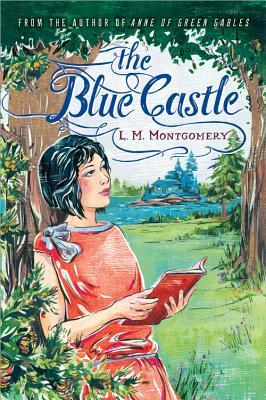
The Blue Castle by L.M. Montgomery
Someone said this was a book from their childhood that they would like to revisit during last week’s TTT… I can’t for the life of me remember who posted that! But the point here is that I LOVED Anne of Green Gables and I never once thought that L.M. Montgomery might have written other books. Silly me.
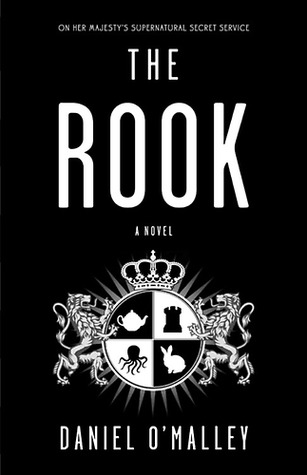
The Rook by Daniel O’Malley
A girl with supernatural abilities (and memory loss) learns that she is part of a secret organization of highly skilled fighters, and wants to know what happened in her past. Intrigue, conspiracy, British government… I’m curious! (Again, I can’t recollect who recommended this to me. I have memory loss too).
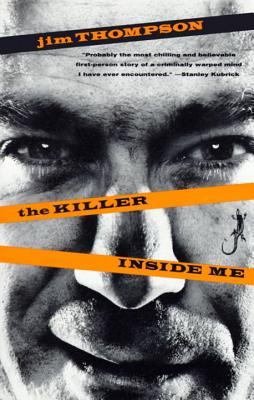
The Killer Inside Me by Jim Thompson
This is an older roman noir, first published in 1952. Roman noirs are mysteries where the protagonist is not the detective, but is a victim, perpetrator, or both. The protagonist in this book is a sheriff in a Texas oil town. Are you not eager to read this gritty crime novel?

The Only Ones by Carola Dibbell
Dystopia (check). Biological manipulation (check). Main character trying to stay alive while multiple factions try to get her (check).
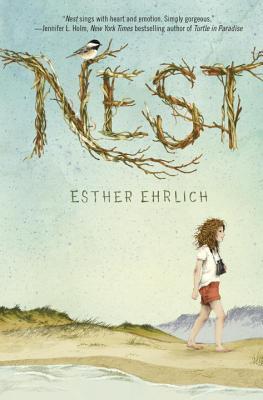
Nest by Ester Erhlich
Wendy Darling at The Midnight Garden posted a great review of Nest. This middle-grade novel seems beautiful and soft, while addressing harder issues (the main character’s mom develops a serious disease) in a genuine and authentic way.

‘Belzhar’ Strikes a Good Note


There are no spoilers in this review, I pinkie swear.

Jam Gallahue is in love, in that bubblegum hormone-fueled hurts-so-good way. She’s in love with a smooth, hot British exchange student, and she knows that this is the real deal.

“Our entire relationship consisted of smiling, smirking, and saying funny things to each other. But I wanted our shoulder to touch. It was as if I thought our shoulders could almost communicate.”

You remember that feeling, right?

So she’s in this relationship where they don’t really have much to say to each other, they just have a mutual understanding of their avowed until death-do-us-part love. Oh and btw, they discovered this love 16 days after they met for the first time.

Fast forward a bit: the boyfriend dies after 25 days of dating (this is not a spoiler), and Jam enters such a state of grief that after one year she still hasn’t emerged. If you are thinking that her grieving seems...like she has deeper issues to deal with… you wouldn’t be alone in that. Her parents send her to a special boarding school for teens that need non-medicated psychological support.

At the school, Jam is placed in an exclusive, invite-only “special topics” English class with an intimate handful of other students. They study Sylvia Plath (hence the wordplay between The Bell Jar and Belzhar) the entire semester, and like Plath, must make regular journal entries throughout. These journals come with a special ability to help the students process their grief and pain in a very unique way.

Throughout the book, I was interested in the story, but had to keep taking two-second reading breaks to roll my eyes. I really dislike romances where the characters don’t show me how they have a long-term sustainable relationship based on something other than, “I just knew it,” or “We had a special connection.” I couldn’t get past how Jam was so in love with a guy that she knew for approximately a month, and whom we as the reader know nothing about besides she thinks he’s hot.

I’m glad I kept reading, however (full disclosure: until 3am). The author, Meg Wolitzer, is not a bad writer of romances, and everything made sense in such a clear way in the end. It’s one of those endings that makes you think back and remember all the clues and hints that were dropped along the way. Like, “Duh, dumb Alisa, why didn’t you pay more attention!?”

As the book progresses, Jam begins another relationship with a guy at the boarding school. She struggles with feeling like she is cheating on the dead British bloke, but Wolitzer makes an elegant contrast between the ways the two different guys treat Jam. It’s not in-your-face and preachy, like some authors that are new to the YA club tend to be. The ongoing comparisons are quiet and demure, yet I think that it could help out a reader who is wondering if their current relationship is healthy or not.

Despite my review’s focus on the romances in the story, the Belzhar’s overall message isn’t about dating. All of the characters are trying to stay living in the past, and are missing out on the present as a consequence. The story is built to illustrate the problems of being too self-abrading with mistakes (hellooo, perfectionist self!), and left me with a powerful punch of one of my favorite self-affirmations: You cannot go back. You can only go forward.

Fashion by the Book || The Walls Around Us

One of my favorite book blogs is Fashion by the Book. This blog is raising the assumptions that you may have of book nerds not having a fashion sense. Seriously, everything that LauraElisabeth puts together is something that I both would never think of and immediately want to wear. I don't have a very good sense of style or a clothing budget, but I love coveting those outfits.

Making outfits based on book covers looks like it's something fun to do, so I downloaded the Polyvore app on my phone, decided on a beautiful book cover, and had a blast. It's really easy to use, and is as fun as it looks. I'll probably make more of these in the future. Thanks for the inspiration and possible new addiction, LauraElisabeth!

The Walls Around Us by Nova Ren Suma


Top Ten Books From My Youth That I Want to Re-Visit

Top Ten Tuesday is a weekly linkup hosted by The Broke and the Bookish. It’s fun to play along, especially since I like to make lists. Join us! I haven’t re-read a book in years, mostly because there are so many other books that are waiting to be discovered. Some of the books on my list I’ll wait to re-visit with my future kids. For the others, I just need to get over my fear of not “being productive” and re-read them!

Piggins by Jane Yolen, illustrated by Jane Dyer
These three books about the crime-solving butler Piggins were my first mystery reads, and I begged my mom to get them for me every time we went to the library. The illustrations are intricate and have clues to help solve the mystery, if your eyes are observant enough!

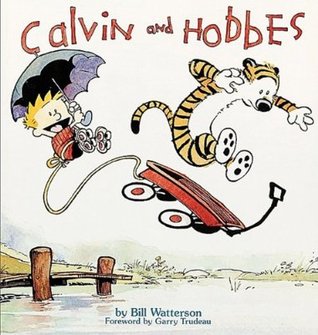
Calvin and Hobbes by Bill Watterson
I loved them when I was little, so did my younger brother. We tag-teamed checking the various books out from the library because there were rules on not checking a book out back-to-back, only being allowed to get so many books by one author/subject at a time, etc. Bill Watterson is a genius because Eric and I loved them, and so did my mom and dad.

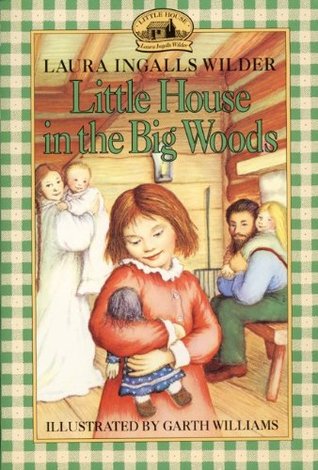
Little House series by Laura Ingalls Wilder
Little House books were a source of comfort and fueled playtime ideas when I was young and lived in a big woods, too. Farmer Boy is my absolute favorite, and I was overjoyed when I got to read it with a former student that I was tutoring. Honestly though, I don’t remember what happens to the Ingalls family when Laura gets a little older, so I wouldn’t mind discovering that all over again.

The Chronicles of Narnia by C.S. Lewis
My mom started reading these to me when I was seven or eight, and when I was a little older I read them to myself countless times. Sometimes I would just read my favorite parts. When I was having a bad day, I would sit in my closet and concentrate so hard on going to Narnia.

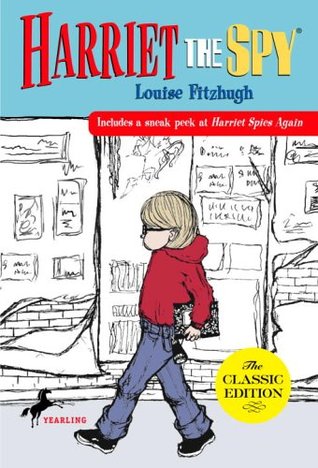
Harriet the Spy by Louise Fitzhugh
I read this book seven times in 2012. I tried so hard to become Harriet: I created a spy kit, bought a hooded sweatshirt, carried a marbled composition notebook everywhere (though it wasn’t green because my town only sold the black ones), recorded what the neighbors were doing, played “town” according to the rules in the book, and I even tried to like tomato sandwiches at a time in life when I couldn’t stand tomatoes.

Agatha Christie Mysteries
I progressed through mystery novels in this order: Boxcar Children, Nancy Drew, Agatha Christie, Sherlock Holmes. I don’t really remember which Agatha Christie books I read, so that’s a sure sign that they will be fresh when I get to read them again.

Gone With the Wind by Margaret Mitchell
I read this book in 6th grade (didn’t understand it) and 10th grade (cried a lot). I told myself that I would definitely read it again.

The Hitchhiker’s Guide to the Galaxy by Douglas Adams
I read all the Hitchhiker’s Guide books in a row when I was 13 or so. I remember giggling an awful lot, and trying to explain the jokes to whomever was around me, but realizing that it’s best if you just read it yourself. I also remember being awed by the revelation of 42. So overdue for a re-read.

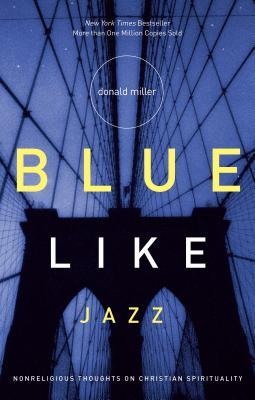
Blue Like Jazz by Donald Miller
I read this book twice when I was in high school, and it completely changed my worldview about Christianity and the church. Miller helped me make my faith more personal and less “this-is-just-what-we-do.” This book made me realize that there are many flavors of Christians, and guess what… they are all still Christians!

The Lord of the Rings by J.R.R. Tolkien
I have actual plans of revisiting it this year! I’m in line for the audiobook of The Fellowship of the Ring at my library, and it’s a full cast BBC production. I’m stoked. I read it in middle school and I am so positive that I missed a lot of its depth. That’s true of just about all the classics that I read when I was a teenager, though.

5 Reasons 'A Tale for the Time Being' is Worth Your Time

A Tale for the Time Being

A Hello Kitty box washes up on the shores of a small island in British Columbia, where it is deemed trash by Ruth, and picked up to be thrown away later. Ruth’s husband Oliver satisfies his curiosity by opening the box, finding a diary and old letters. When Ruth begins reading the diary, the perspective changes to that of the diary’s writer, a Japanese teenager named Nao. Nao plans to write about her Buddhist nun great-grandmother Jiko, but reveals more about her personal life and struggles in the process.

Nao and Ruth are imperfect yet intriguing mirrors of each other. Both were placed involuntarily into a culture that they didn’t ask for and don’t want to accept. They remain convinced that their former lives would have freed them from all of their current problems. For Nao, this means her life in Silicon Valley where her dad was a programmer, before he lost his job and had to move the family back to Tokyo. For Ruth, this means her life in New York City, where she was filled with inspiration to write and had many like-minded friends. Both process the suffocating isolation that is their new lives by biting their tongues until withholding their thoughts is no longer possible.

I’m still reeling from trying to process all that occurred in A Tale for the Time Being. I listened to this as an audiobook, beautifully narrated by the author, Ruth Ozeki. After the book ended, she explained that the physical book has footnotes, appendices, and illustrations that greatly enrich the story, and understandably, those simply can’t be conveyed in an audio format. Even without those, the story is bursting with influences from esoteric sources. To condense my thoughts on the novel, without giving away spoilers or re-writing the book, I think it would be easiest to explain why I loved it by concentrating on five points:

5. It’s meditative yet brilliantly paced.
To me, when I read a book, good timing is more important than plot. This book delicately balances descriptions of Buddhist funeral rites and of Pacific Ocean current patterns while still moving the plot forward. I enjoyed pondering the subjects that needed a little more brain power as much as I enjoyed the parts where characters raced against time.

4. It digests recent historical events into our cultural metanarrative.
9/11, the Fukushima Daiichi tsunami and nuclear disaster, and the lingering effects of WWII are things that we as a culture are continuing to process. It seems that every year Hollywood retells war stories completely fascinated with violence. How can we not be fascinated by it? We live beside it. And there’s no doubt that this attempt at storing our violent histories is similar to storing the nuclear wastewater in underground tanks—it cannot be contained and is bound to seep out into our culture. A Tale for the Time Being subliminally relates the prevalence of violence through the horrific bullying of its characters. But grandma Jiko uses the Buddhist perception of eternity to teach an alternate way to accept violence. I’m thankful for Ozeki’s work in this area by opening up other narrations of history and hopefully permeating our collective conscience.

3. It addresses ups and downs of being bicultural.
Nao lived most of her life in Southern California, and Ruth clearly identifies as being from NYC. Ruth, who is Japanese-American, and Nao, who is, practically speaking, American-Japanese, both wince with questions like: You are Japanese, why can’t you do this? Or the pregnant expectations of: You live here now, why don’t you act like us? The truth is, it’s not that simple. But one of the benefits of being bicultural is that, while they may not perfectly fit into either culture, they are able to form a relational bridge between both.

2. Ecology, theoretical quantum physics and Zen Buddhism are seamlessly blended.
Don’t be intimidated! Thankfully, Ruth also doesn’t have much of a grasp on these subjects, and other characters come alongside to teach her. It can come off as preachy or patronizing, but it’s worth the sacrifice to be able to connect the dots and follow the path the author is taking you down. In Jiko’s view, science and Buddhism don’t conflict at all. In fact, they have been supporting each other all along. This part isn’t overly-explained, and I loved the enlightened feeling I got when I was able to reach the conclusions on my own.

1. The writing is eloquent and breathtaking.
At times I was giggling, other times I was reverent, but at all times I appreciated the deliberate care and consideration that Ozeki put into crafting this story.