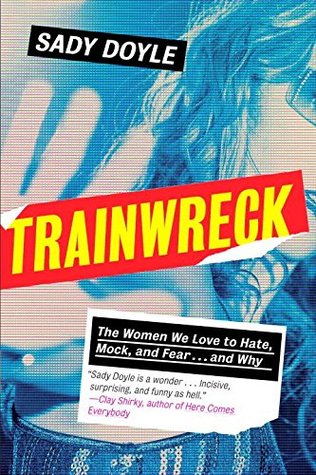
Trainwreck by Sady Doyle

Trainwreck: The Women We Love to Hate, Mock, and Fear...and Why is a very up-to-date look at tabloid culture (or since we don't really buy tabloids anymore... internet culture), how it is enabled, and why it even exists. Why do people care so much about people they don't even know, right?

Doyle shows, using conversational blog-type language and mountains of primary source material (complete with citations in the back), that fabricating a trainwreck narrative out of women in the public eye is nothing new, and has existed for centuries. It comes primarily from women, actually, and our internalized patriarchal standard that, "The good girl, the un-trainwreck, is feminine selflessness, taken to its most literal extreme; there is no self, no there, except as a reflection of someone else's wishes. She never makes mistakes, and she never has regrets, because she never does anything unless she is asked to do it. She is so entirely cleansed of neediness, irrationality, and inner conflict that the average woman cannot imitate her even in silence...The ideal woman has a silence that arises form never wanting to speak about anything at all." The trainwreck is a woman who we can project our shame and blame on to (If Britney wasn't such a sexualized teen, teen girls wouldn't be sexualized), or to pat ourselves on the back (I may not be rich, but at least there are no photos of me in my underwear on the internet), or to backup our beliefs that the patriarchy is right (See? You can't go around acting/being that way for long before you're put back in your place), to take joy in perceived social justice (Paris Hilton never had a hard day in her life, so it's good she's finally having a reality check), or maybe even our own schadenfreude.

Of course, many of our favorite trainwrecks really are mentally ill, or substance addicts... but in those cases, just ask: would you go along with the harassment, invasion of privacy, and millions of simply awful comments about someone's looks/personality/behavior/habits/emotions/personal life if this person was suffering from cancer instead of mental illness? I would hope not. (But that reminds me... the internet sure had a field day when Angelina Jolie had pre-emptive surgery, didn't it?)

Trainwreck culture reaches beyond celebrities to find much easier victims: everyday people who don't have the luxury of canceling work or school because of "exhaustion", who don't have a PR team to create a comeback tour, etc. Online bullying and harassment is a real thing that children and adults alike face on a daily basis. Speaking in public about anything, and on the internet everything is in public, is an invitation to get beat back into silence.

The point of the book is this: We are enabling a fictional narrative to dominate our minds, bodies, and culture—the lie that there are "good women" and "bad women" and that all of us are either one or the other, when in fact we are all humans who make good decisions and bad decisions, who do holy things and sinful things... even the privileged, air-brushed celebrities. "Women are not symbols of superhuman virtue. Women are not symbols of all that is disgusting and corrupt. Women, it turns out, are not symbols of anything, other than themselves."

I really enjoyed reading this book. It would be great reading material for older teens, and could be used in the sociology, psychology, gender studies, or journalism classrooms, or for extra-curricular clubs. It would be easy to create discussion material and project ideas from the chapters.

Got any more good books about feminism to recommend to me?

This Week in Reading: Week 3

Gosh, what a heavy week—Obama said goodbye to public office, Trump was inaugurated and Republicans started wreaking havoc, oh, immediately. And the women’s marches around the world were great, but, you know, we have a lot of work to do.

Which is why I’m really happy that I read the following three books this week!

Mafalda #2 by Quino
I’m continuing with this Argentinian comic strip series that had so much success across South America during the 1960s-70s. It’s addresses war, human rights, the environment, and feminism in a warm, lighthearted way. Read in Portuguese.

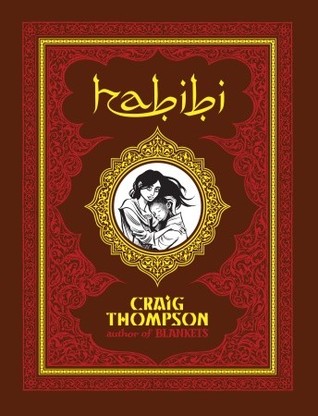
Habibi by Craig Thompson
I LOVED this book! Thompson studied Arabic calligraphy, the Koran, the Hadith, and Arab traditions, myths, and culture for nine years in order to create this book. The result is a huge tome stuffed with magnificent beauty that combines everything in a magical, heart-wrenching package. There were a lot of surprising, hard parts in the story, but what really stood out was the complexity of the combination the stories that come from physical calligraphy, with religious stories, and A Thousand and One Nights. Read in Portuguese.

Trainwreck by Sady Doyle
So ideal that I finished this book on a sliver of contemporary feminism the same week as the Women’s March on Washington (and around the world)! A longer review is coming, but until then…
Doyle shows, using conversational blog-type language and mountains of primary source material (complete with citations in the back), that fabricating a trainwreck narrative out of women in the public eye is nothing new, and has existed for centuries. It comes from an impossible-to-achieve (examples in book!) standard and internalized patriarchy. We enable a fictional narrative to dominate our minds, bodies, and culture—the lie that there are "good women" and "bad women" and that all of us are either one or the other, when in fact we are all humans who make good decisions and bad decisions, who do holy things and sinful things... even the privileged, air-brushed celebrities.

This Week in Reading: Week 2

One of the highlights this week was I got a São Paulo public library card! I plan to write about that in a different post, but I'm happy that my reading possibilities have expanded :) Like always, I'm in the middle of like five books (official count... unofficial is closer to 10) and finished three.

A Wild Sheep Chase by Haruki Murakami
This is the third book in The Rat series (a nickname of one of the characters is The Rat), but it is only vaguely connected with the other two (Hear the Wind Sing, and Pinball). I mean, if you have read those two you will recognize some characters and places, but all three of the books stand alone. A Wild Sheep Chase is the best of the three so far, but there is a fourth and final book in the series (Dance Dance Dance).

In this book, a typical Murakami dude (single, likes sex but has trouble maintaining relationships with women, drinks a lot, has an unremarkable life, no close friendships, likes playing vinyl records) is told by a mysterious stranger that he has to find a specific special sheep, OR ELSE. So it’s almost like a detective novel, revolving around a sheep, a suicide, and a whole bunch of weird &$#% near the end.

I liked it, but my favorite Murakamis are still 1Q84 and Kafka on the Shore. I feel like I read about five Murakami books a year but never get any closer to accomplishing my goal of reading all of his works… Maybe 2017 will be the year.

Mafalda #1 by Quino
Mafalda is a much-beloved Argentine comic strip that ran from 1964 to ‘73. It was translated and published in many South American countries, including Brazil, and its themes of poverty and inequality, brain drain, inflation, corruption, political freedom, female empowerment, and world peace resonate even today. Mafalda is a young girl (like 5 years old), she has a mom and a dad (who remind me a lot of the mom and dad from Calvin and Hobbes), and she has a gang of friends comprised of a super-capitalist, a girl whose sole aim in life is to get married and have kids (frequent conversations revolve around trying to convince her to dream bigger), and an all-around normal boy. Mafalda herself is blunt, observant, and introspective, like Charlie Brown but with less pessimism. I’m reading in Portuguese and I'm proud of myself that I understood most of the punch lines and Silas only had to explain a couple. Humor is the last thing to be understood in a language. It’s cute and uplifting, and it reminds me to be content with life’s simple pleasures.

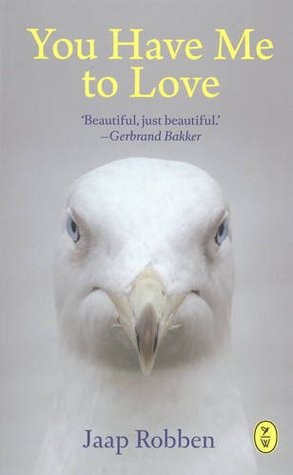
You Have Me to Love by Jaap Robben
I read this one for work (I’m doing an internship with a foreign rights agency!) — originally published in Dutch. A boy on an island has a dad who dies at sea, and then his mom goes crazy, and the boy is just trying to navigate puberty while being stuck on a tiny island with a crazy mom. He starts caring for a baby seagull by locking it up and forcing it to depend completely on the boy for food, which is a reflection of the oppressive care that his own mother gives him. I guess the message of the book is that people need to socialize with others in order to not go crazy.

Plot points happen quite abruptly (you find out the mom goes crazy from one page to the next), and I would have originally thought that it’s the author’s style, or maybe something got lost in translation. But I’ve read three Dutch books in the past month and I now would say that it’s a cultural preference or an aesthetic that is pretty different from what I am used to reading. It’s not bad, but it’s just different. These three books all had me like:


I’m glad that I’m getting the opportunity to read so many different types of stories. Until next week!

This Week in Reading: Week 1

I challenged myself to read 100 books in 2017. Last year when I challenged myself to read 52, I didn’t think that I would actually read that many. I want to read 52 books every year, but I don’t really care too much if I complete that amount or not—the page count varies so much in the types of books that I like to read that reading a full 52 books doesn’t matter much to me. Consequently, I had never done it before. But in 2016, I surpassed my goal by some 40 books! And I read a wider range of things than ever. I was purposefully seeking out books by foreign and minority authors (in addition to reading whatever caught my fancy at the moment).

All this to say, I’m going to continue reading a lot of books this year, and I think I can read at least 100.

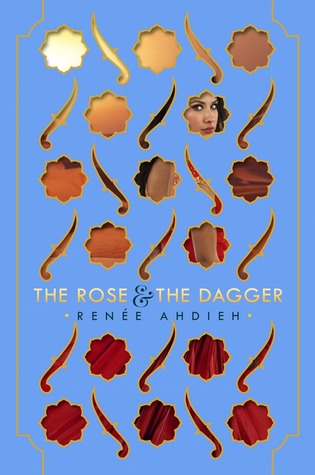
The Rose & the Dagger by Renee Ahdieh
This is the second and final book (the first is The Wrath & the Dawn) in a romantic, dramatic, adventurous and beautiful take on One Thousand and One Nights. This book started out slow, but picked up the pace to tie up all the loose ends. It’s kinda fun reading a duology instead of a trilogy! Actually, there are quite a few “alternate” chapters and storylines available as ebooks, but as much as I enjoyed reading this book, I was satisfied when it ended. It didn’t hit me as one of those “Aaahh I never want this universe to end!” books where you feel sad and a bit down for a week after you finish the book. I’ve read a few retellings of One Thousand and One Nights in the past couple years, but have never read the original. I guess with the live-action Aladdin coming out soon, it’s going to be popular to read, so I should get on that.

The Perks of Being a Wallflower by Stephen Chbosky
I’ve started watching Gilmore Girls and though I had never seen an episode before last month, I always knew that Rory and I had a lot in common. I’ve taken a glance through Rory's reading list, and we have similar tastes… meaning we read everything. What surprised me was how many of the books on her list that I have already read, and that made me want to read all the rest. I really love checking things off the list. So that’s why I read The Perks of Being a Wallflower. That, and I’ve heard of this book my whole life but had no idea what it was about.

If you like reading about precocious teenage boys (they’re so adorable), you’ll probably like this epistolary/diaristic book. The first part of the book comes across as advice for teenage readers that barely hides the fact that the adult author is trying to make the book a guide for any possible problem that a teenager could confront. But if you stick with it, the story develops and the preaching becomes more subtle. The characters face all kinds of heavy situations: drugs and alcohol as coping/self-medicating, abortion, rape, physical and sexual abuse, discovering sexuality in all kinds of ways, etc. If you’re a teen, it would be good to have an adult read it at the same time so you two could talk about it.

Though one of my favorite parts of the book is kind of preachy: Sam and Charlie have a heart-to-heart about what they think and the expectations they have regarding each other. It’s a really sweet and honest moment, but Sam confronts Charlie on what friendship really is—friendship is not going along and “being there” for everything your friend is doing. It’s confronting and telling your friends No if they are doing something that is not healthy. A good lesson for all of us.

My Favorite Books from 2016

I started this year with a pledge to read all of Proust’s In Search of Lost Time. I didn’t even finish Swann’s Way. One day I’ll get to it. There are certain books that I need a physical copy to hold while I read: books by Toni Morrison, for example.

In 2016, I read more than I ever have in my life. Eighty-six books and counting! Part of this is because I made an effort to practice reading faster—chunking, not sounding out syllables, listening to audiobooks at a faster speed—but also I really got my personal system down for reading in nearly every spare moment. I have an audiobook, a non-fiction, a literary fiction, a book in Portuguese, and a “fun” fiction going all at the same time. So no matter what my mood or where I am physically at (I pretty much only read e-books), I have something to fit the bill. I gave up reading a lot of books, and this helped me not get swamped with procrastination and avoidance of reading because I wasn’t really into what I was working on.

Most of the books I read were fine, mediocre, nothing to write home about. But here are the ones that were really memorable for me.


Nurture Shock by Bronson & Merryman
Non-fiction gathering fistfuls of psychological studies that show what kids do naturally, and how to help them be better. Did you know that humans are born racist and you have to actively teach them to not be, starting at like age 1?

11/22/63 by Stephen King
I’m gonna call this Stephen King’s best book ever. It’s not scary at all; it’s an action-romance and it will give you warm fuzzies.

Earthseed series by Olivia Butler
I wasn’t overwhelmed by the greatness of this dystopian speculative fiction, but man, Butler predicting Trump’s campaign slogan and other stuff more than two decades ago is eerie.

The Hundred Secret Senses by Amy Tan
I know people have a bone to pick about how Tan propagates racist stereotypical thinking, and how white people love her books so much because she writes characters about “good immigrants” aka Asians who do exactly what we expect them to do. But honestly, she is a really, really great storyteller and an amazing author. This was the first book I’d read by her and I was just fascinated. 


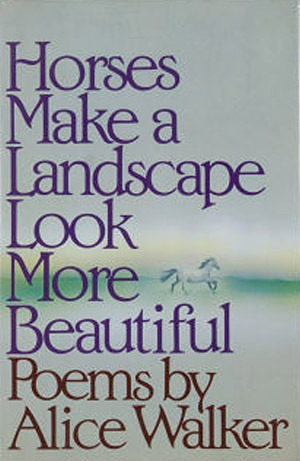
Horses Make the Landscape Look More Beautiful by Alice Walker
I’ve been on a quest to read and enjoy more poetry, but usually I just don’t have the patience for it. I loved the poems in this collection because they are powerful, approachable, and important: they talk about specific injustices in society.

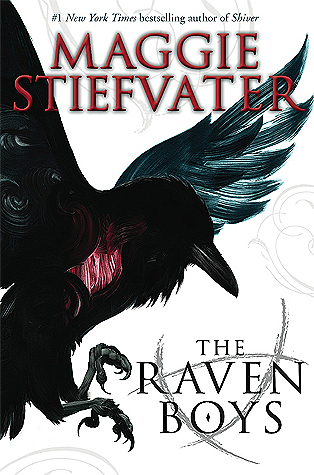
The Raven Cycle by Maggie Stiefvater
YA urban fantasy set in small-town Virginia with awesome storycrafting and great character work. It’s not often that I fall in love with every one of the characters, even the bad guys.

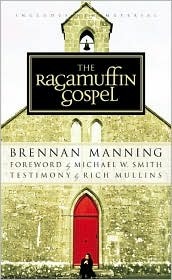
The Ragamuffin Gospel by Brennan Manning
I only read a handful of Christian books this year, and none of them came close to this classic about giving yourself and others grace and forgiveness. It is particularly important in today’s tense climate where it’s easy to step on other people’s toes and judge other people for not being as morally superior as yourself. I’m going to reread this one for sure.

Simon vs the Homo Sapiens Agenda by Becky Albertalli
Shows a great parent-teen relationship that is so sadly absent in many YAs. p.s. Simon is in film production, so read it now and be cool early ;)


My Brilliant Friend by Elena Ferrante
Small wonder the entire world is talking about this series set in Napoli in the 1950s. Rich, complex, beautiful pictures of daily life, but what stood out was the explanations of the psychological decisions behind why characters do certain actions. I have never read a book with such a good understanding and conveyance of human motivations.

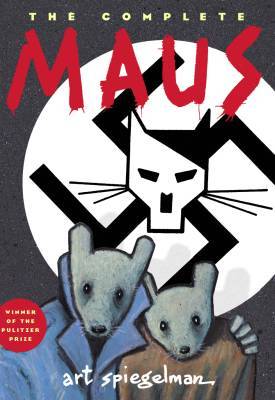
Maus by Art Spiegelman
This is the true story of an Auschwitz survivor (the author’s father), and I felt like I got an understanding of why people do selfish things, or why they act uncharacteristically in times of duress. It helped me to be more merciful.

Half of a Yellow Sun by Chimamanda Ngozi Adichie
Set in Nigeria in the 1960s, this book looks at the creation and destruction of the nation of Biafra through the eyes of its characters: two upper-class sisters, a British guy, a scholar, and a servant. It’s an all-around solidly graceful book, but I really liked the changes that happen to the attitude of the British guy as he moves from his colonialist identity to trying to embrace and carve a space for himself in Biafra. I can identify.

Little Altars Everywhere by Rebecca Wells (prequel to the Ya-Ya Sisterhood)
The slow reveal of this Louisiana family’s dark secrets blew me away.