Guest Post || We Have Always Lived in the Castle

Charlene from Bookish Whimsy and I decided to exchange book reviews of Shirley Jackson novels! I'm really happy that one of my go-to book bloggers was so friendly and willing to play along in spite of my flakiness (hopefully I'll be able to return to normal programming soon). I liked learning more about her tastes, even if they are a bit different than mine.  -- Alisa


This is the first Shirley Jackson book I have ever read, and it was an interesting introduction to her kind of curious and creepy world - with characters who act a little strangely, and a view of the human race that is not at all kind. I am still not sure what I feel about this book actually. It was a gently harrowing read, with a heroine in Merricat Blackwood who I have such weirdly contradictory feelings for. On the one hand, I’m intensely sympathetic towards her, and yet at times, I find her very annoying. Although her instincts for the most part are right on, especially when it came to one character who was so unlikable, I couldn’t help but root for Merricat’s murderous thoughts about him.

The novel is a study in strange characters. There is a mob-like, and very unpleasant group of people who live in town and look down on the Blackwoods. The author captured a vivid realism in the small town gossip and small-minded hatred of the people which was both disturbing and thought-provoking. And terribly sad. The surviving Blackwoods are each eccentric and have their own unique mannerisms and behaviors which also made them vividly realistic and interesting to get to know. While all the Blackwoods are unfortunate in different ways, I had the most sympathy with Constance, who was such a good character and yet afflicted by her past and her apprehensive nature. I really wanted something good to happen for her.

There is a reveal in this book, that is not at all shocking because it is made pretty obvious from the start, but because of this, I found the story meandering and slow at parts - and again, much more of a study in characters and atmosphere than in plot development or suspense.. There is a pervading sense of stagnation though, in this book, that I think is part of the characters, and so perhaps it’s purposely made a part of the plot. This is short read though, with some very intense moments of dread woven into the story. I don’t think I actually enjoyed dwelling in this world Shirley Jackson created because it can be so unnerving and sad, but this was quite a vivid book.

The Problem with Preaching

source  

I have read three books lately, and they all committed the same sin: preaching.

You've read this before: a certain character breaks the fourth wall so to speak, and starts being the mouthpiece of the author. It's the part in the book when I stop reading and start skimming, not unlike a teenager's eyes glazing over when an adult starts to lecture about the importance of not breaking curfew.

Before I touch on the books, I want to show you an excerpt from an NPR interview with the director of Inside Out, the most recent Pixar film about emotions. (Go see it; it’s amazing!)

GROSS: So did you imagine, when you were making this film, psychologists and parents using the film to explain to children what their own emotions were and to tell - to help tell children, like, it's OK to be sad. Tantrums aren't very helpful (laughter). We know you have anger, but, you know, you have to kind of mix that with the other emotions. 
DOCTER: Well, not really... 
GROSS: So did you think of this as a kind of, like, teaching film? 
DOCTER: (Laughter) No. In fact, I know, like, for a lot of people that's kind of a bad word, right? You don't want to have a lecture. … There are - we've already had discussions with people who feel as though the film has really helped them. There's one story that's pretty amazing. A guy who we work with - and we had screened the film for our friends and family along the way just to make sure it was working and it wasn't too complex, you know, especially for younger kids. Luckily, they not only got it, but this guy came back the next day and he said, I got to tell you this story. My son has been taking swimming lessons. And he's been afraid to dive off the diving board. It's just too high, and he's scared, so he hasn't been able to do it. Yesterday, after seeing the film, we went to lessons, and he dove off the diving board. And everybody said, yeah, that's great. How did you do it? And he said, well, I just felt like fear had been driving, and I asked him to step aside. And for us, we were sort of blown away. Not only did he get the film, but it was actually making an impact in his life. That was, like, the ultimate receipt.

The takeaway lesson here, from a company that understands how to communicate to people possibly better than any other company in business today, is: Don’t preach, demonstrate.

I don’t know why authors of contemporary novels choose to preach, why whole publishing houses are based on this concept, but I can speculate:

  1. It’s easier to preach than to demonstrate. It’s very straightforward, and it requires considerable less thought to mind-dump than to craft a story in which the message is conveyed between the lines.
  2. The audience is not considered trustworthy or able to receive the correct message. Anyone who has actually worked with kids/teens can tell many stories of how they were caught off-guard by how perceptive, insightful, or observant kids are. That’s part of what makes kids funny, because they can make such astute connections that they seem like little adults. And yes, when books make inferred connections about a moral lesson, it’s really important to have a conversation with the younger reader about what they understood or have questions about. But next time you talk to a youth, ask some open-ended questions about a story they read or watched recently, and you might gain some life advice in the process.
  3. The author is not skilled enough. Though I believe that nearly anyone can be a good author with enough reading, writing, critiquing, and editing, it’s possible that the author of a preachy book just hasn’t developed their skills to a point where they can objectively look at their manuscript and know what to change.
  4. The author and editor did not do sufficient revision work. Maybe they were running short on time, or perhaps the editor isn’t assertive or confident enough to confront problems in the book. Maybe it was self-edited and the author was holding on too tightly to beloved passages.
  5. There is a lack of patience. Not enough patience to write and revise. Not enough patience to address what is working and what isn’t in a manuscript. Not enough patience to develop characters, plot, and scenery to reach a point where a message can be gracefully conveyed. Not enough patience with the reader. Not enough patience from the publishing house to push out a finished product.

These are the books that I read, and could agree with all, or at least part, of their sermons:


The problem for me was not the message per se, but the method of delivery. If I may distort Marshall McLuhen’s famous line, “The medium is the message,” then the message becomes: shove your beliefs down the throat of the person you are talking to. Beat them over the head if you have to. This medium of delivery, however, is outdated and irrelevant for western culture in the 21st century.

It’s why McDonald’s ads say, ‘I’m lovin’ it’ and not, ‘We sell cheap burgers that will save you time and money.’ And it’s also part of the reason why Instagram is used by 52% of teens and Twitter is used by 33% (source). Because our generation cares more about witnessing emotions and experiences than being told about them.

The novel has a unique position. We don’t go to it because we want to read lecture notes about humanistic philosophy, or to have the pillars of the Christian faith explained. We go to it because we want to be able to relate to the experiences that the characters have there. We want to travel with the characters as a gradual understanding of these tenants change their decisions, and ultimately shape their lives.

In Anna Karenina, Leo Tolstoy demonstrated the process of converting to active faith in the Christian God from agnosticism over a span of 800+ pages. He so gracefully showed all facets of possible arguments within the decisions that the characters make (and how their actions frequently contradict their conversations), that when finally Konstantin Levin has a full spiritual awakening, the reader has such a grounded understanding of how it came about that s/he is able to experience the joy and relief that Levin is feeling. This is what novels were created for.


‘Preach the Gospel at all times; when necessary, use words.’ 
Francis of Assisi


Top Ten Books That I Will Never Read

This week's Top Ten Tuesday (hosted by The Broke & The Bookish) is a linkup that I couldn't pass up: Books that I will never read! This list isn't all hate, but there is a whole lot of judgement, side eye, and duck lips going on here.


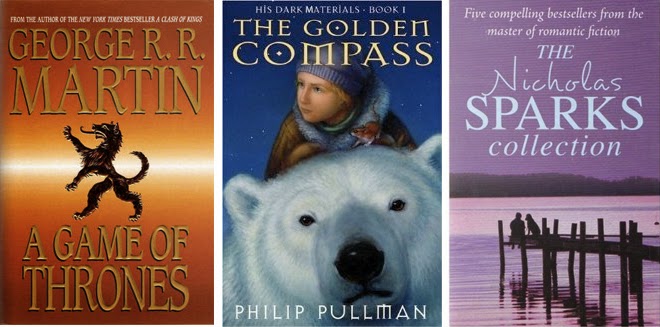
10. A Game of Thrones by George R.R. Martin
They are just so big and daunting… and I have to make character maps with most normal length novels in order to remember the characters. What would I have to do with these books?

9. The Golden Compass by Philip Pullman
This book was written to instill atheism and undermine Christianity. There’s a difference between writing a children’s book to teach about something (morals, friendship, atheism), and writing a book to teach kids that religion sucks. Even if your religion is believing in magical invisible flying cats, I believe authors should respect that.

8. Nicholas Sparks novels
I see the movies, which are cute, sappy, and predictable, and that’s enough for me. I’m more of a Georgian England romance kind of gal.


7. The Fault in Our Stars by John Green
This book is similar to a good pop song that you would have enjoyed except for the radio played it a million and two times too many. It’s likely that I’ll read some of Green’s other books (I read Will Grayson, Will Grayson actually), but I’m gonna pass on this one.

6. Eat, Pray, Love by Elizabeth Gilbert
I’m feeling so cynical while making this list! But from what I understand of this book, the author has a mid-life crisis, travels around and discovers simple living and gratefulness, then writes about it. Great if you need to read this, but I already did that whole experience five years ago.

5. The Shack by Wm. Paul Young
Please find me one person that you have met in real life that liked this book. One. Person.


4. Shopaholic series by Sophie Kinsella
I’m as big of a Sex & The City fan as the next lady who wonders how Carrie could afford a walk-in closet in NYC living on the money made from a sex column, but I like my trashy TV time to be separate from my book reading times.

3. The Education of Little Tree by Forrest Carter
Duuude, I listened to a This American Life (http://www.thisamericanlife.org/radio-archives/episode/527/180-degrees) episode about this book and its author. The author is actually a very influential KKK member and this book is absolutely not a change of heart.

2. Twilight saga by Stephenie Meyer
I just. I can’t, you guys.


1. Fifty Shades of Grey by E.L. James
I do enjoy reading me some good live blogs, however.

New on the Stack || April Edition

New on the StackThe Deliberate Reader hosts the monthly linkup New on the Stack to share what you’ve added to your piles in the past month. I separated my acquisitions into "smart people books", novels, and graphic novels/manga. And goodness, I need to lay off the ARC requests. That will be my May resolution: no more ARCs!
Salad Anniversary by Machi Tawara
How I got it: Netgalley e-ARC
Why I got it: Poetry month was last month and I really wanted to enjoy it.

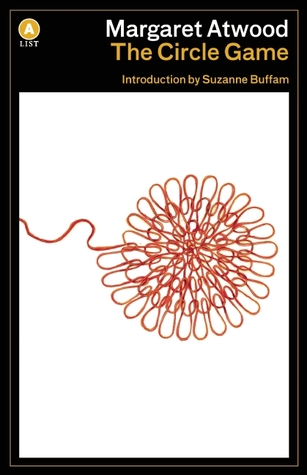
The Circle Game by Margaret Atwood
How I got it: library ebook
Why I got it: I had high hopes for reading a lot of poetry last month, but that really fell flat. I didn't finish this one though I adored the poems I did read.


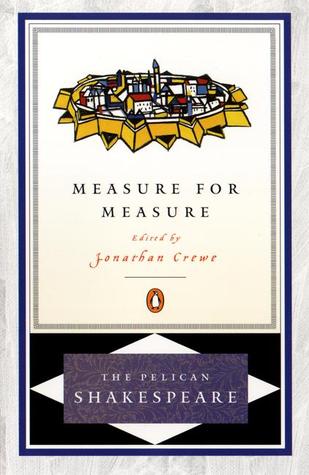
Measure for Measure by William Shakespeare
How I got it: library audio drama
Why I got it: To do a review for the Bard on the Blogs event. You can see my guest post on Alexa Loves Books.


Anna Karenina by Leo Tolstoy
How I got it: library audiobook
Why I got it: This has been on my TBR for years (literally), and right when I needed a book to listen to, it was available.


Bream Gives Me Hiccups by Jesse Eisenberg
How I got it: Netgalley e-ARC
Why I got it: There is little I love more than idiosyncratic short stories.


The Star Side of Bird Hill by Naomi Jackson
How I got it: Netgalley e-ARC
Why I got it: Honestly, I'm a little burned out on YA lately. I've been wanting some heavier, more refined, subtler reads.
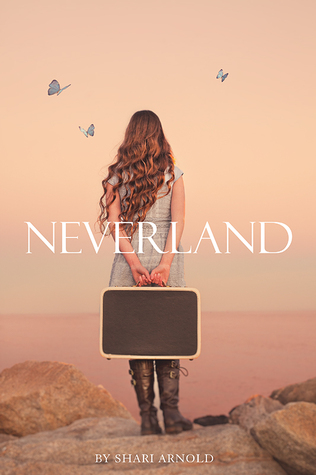
Neverland by Shari Arnold
How I got it: Netgalley e-ARC
Why I got it: The cover drew me in. Plus, it's a re-imagining of Peter Pan!


Barry Goupe: In the Midst of Lies by Sean P. McClure
How I got it: The author reached out to me and sent me an e-ARC.
Why I got it: Being a self-published author is tough, and I'm still keeping with my resolution to get over my prejudice against self-pubbed books.


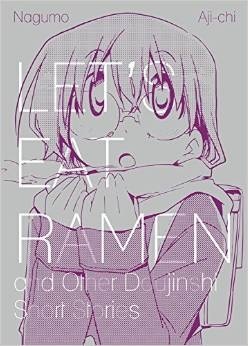
Let’s Eat Ramen and Other Doujinshi Short Stories by Nagumo and Aji-Ichi
How I got it: Netgalley e-ARC
Why I got it: Doujinshi is, from what I understand, independently published manga. Like, manga for manga-creators. Zines of the manga world. I'm so in.


Shadow Show: Stories in Celebration of Ray Bradbury by Neil Gaiman and friends
How I got it: Netgalley e-ARC
Why I got it: Ray Brabury? Neil Gaiman? Graphic novel? No need to say more.


Low, vol. 1: The Delirium of Hope by Rick Remender and Greg Tocchini
How I got it: Netgalley e-ARC
Why I got it: Basically I love anything about the ocean, and the illustrations looked totally gorgeous (which they are, btw).


Twisted Dark, vol. 1 by Neil Gibson
How I got it: Netgalley e-ARC
Why I got it: This is a bunch of interconnected short stories that promised to be dark and...twisted.


Wayward, vol. 1: String Theory by Jim Zub, Steven Cummings, and John Rauch
How I got it: Netgalley e-ARC
Why I got it: It reminded me of a Miyazaki film, and boy was I right. A must-read if you like Miyazaki.


Did you read any good books that I should add to my stack in May?

3 Graphic Novel Mini-Reviews

Saturday is Free Comic Book Day! (Pss… Check here to see who nearby is participating.) Yeah yeah I know the difference between graphic novels and comic books, BUT in honor of illustrated story telling, here are some graphic novels I read recently!

Low, Vol 1: The Delirium of Hope by Rick Remender
In the future, the sun is on the verge of death and its solar rays are out of control. Humans live in underwater colonies to be protected from the sun, but the air supply is going sour and one ridiculously optimistic woman believes she has a way to save humanity… and her family. Full-color, richly illustrative, of course I love the way that undersea animals have evolved into beautiful scary creatures.
For fans of: metaphysics (the plot revolves around if positive thinking determines reality), dystopias, light sci-fi

Wayward, Vol 1: String Theory by Jim Zub, Steven Cummings, John Rauch
A teenage girl who grew up in Ireland moves in with her Japanese mom in Tokyo. She discovers she has supernatural powers to see things that other can’t. The infusion of Japanese mythology, full-color beautiful art, realistic Tokyo scenes, and interesting characters was fantastic.
For fans of: Miyazaki’s Spirited Away, contemporary stories based in Japan but not manga per se.

Twisted Dark, Volume 1 by Neil Gibson
A collection of dark short stories which feature recurring characters (if you can spot them!). The art styles vary and the plots are all totally different. The writing is pretty straightforward, but it’s interesting. I was most interested in the story about human slavery in the United Arab Emirates, because I used to live there. It was extremely accurate of what really happens, and the illustrations were so realistic that I could recognize specific parts of the city.
For fans of: text-reliant graphic novels, Alan Moore